
Last updated November 15, 2026
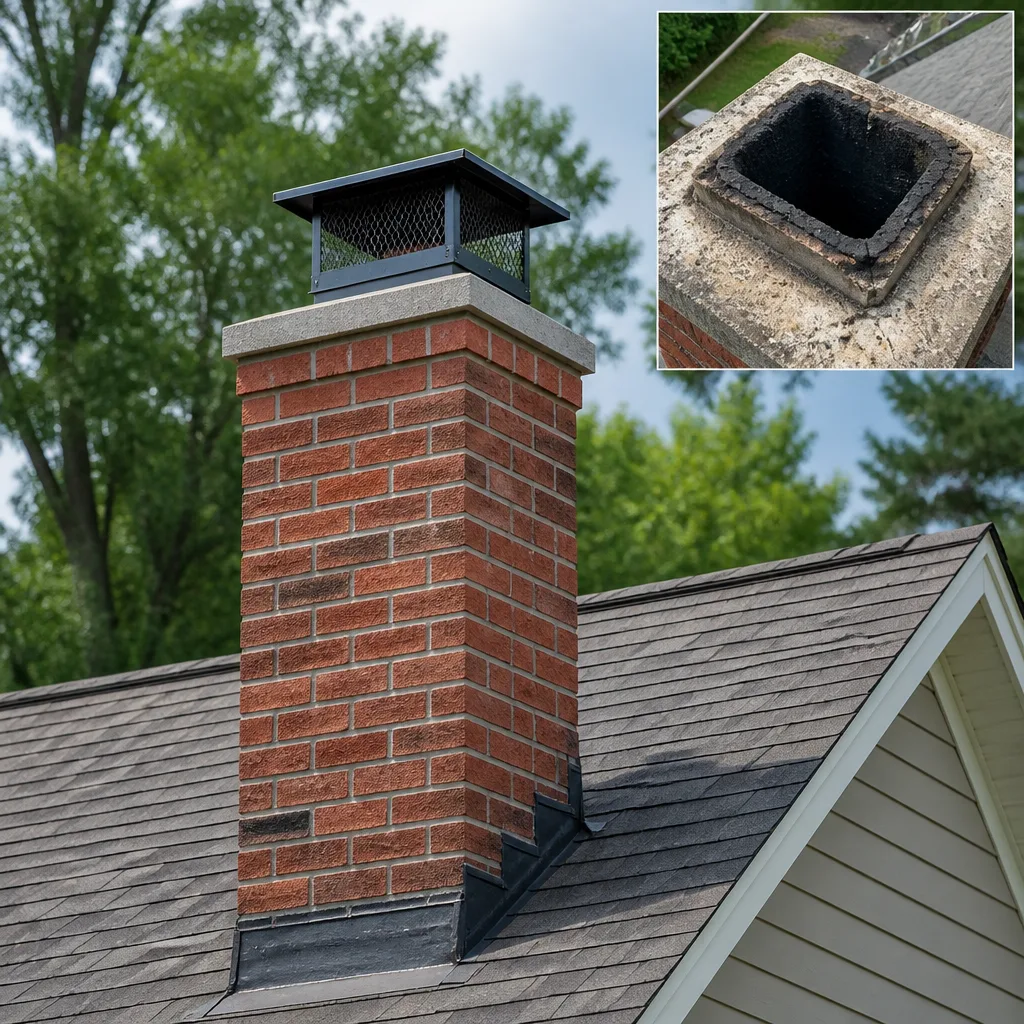 Sweep & inspection
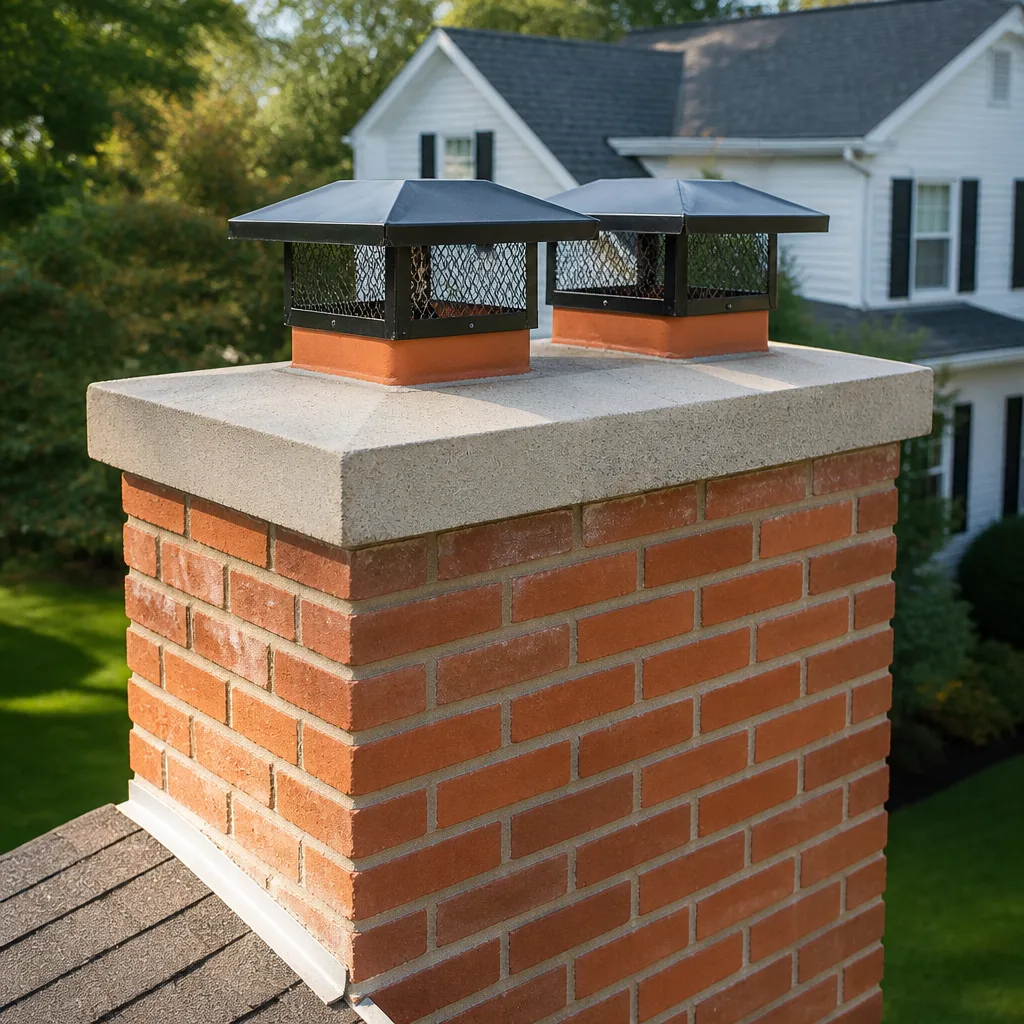 Caps & crowns
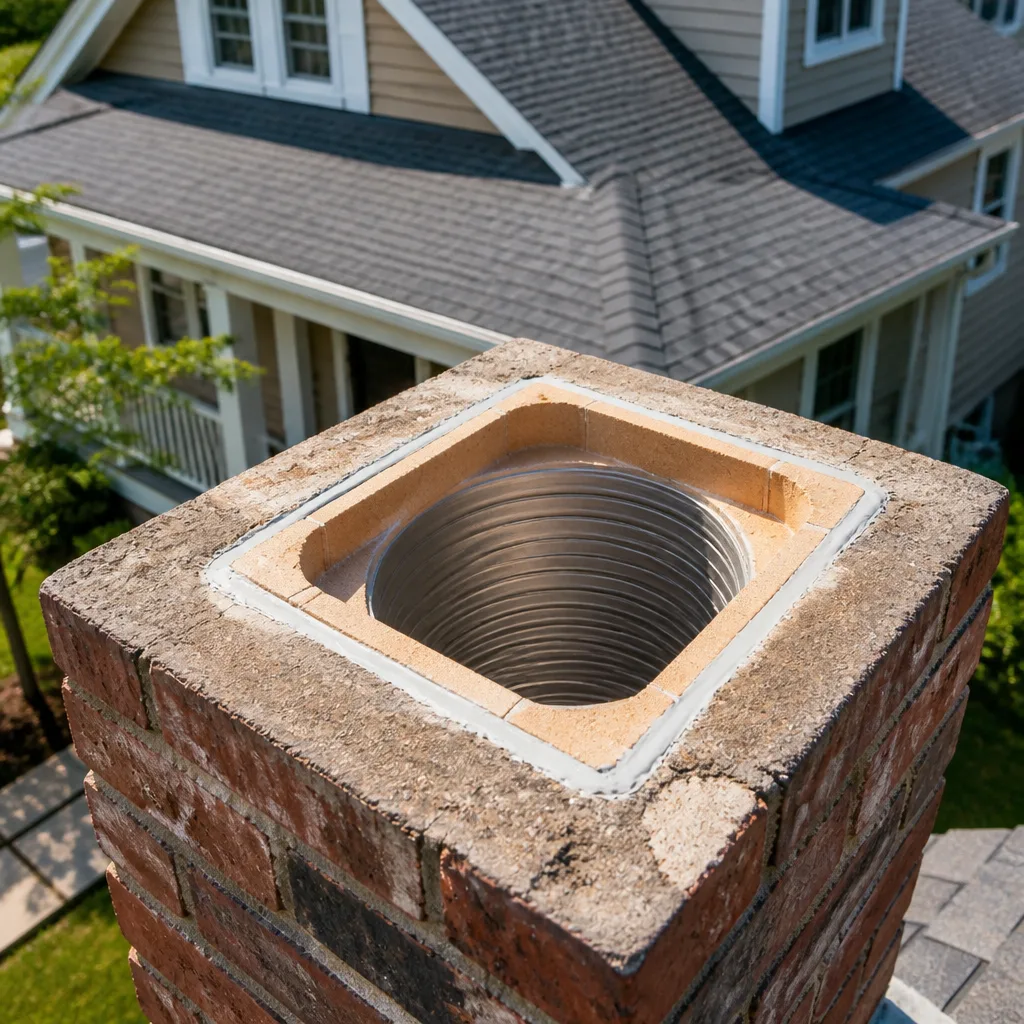 Flue relining
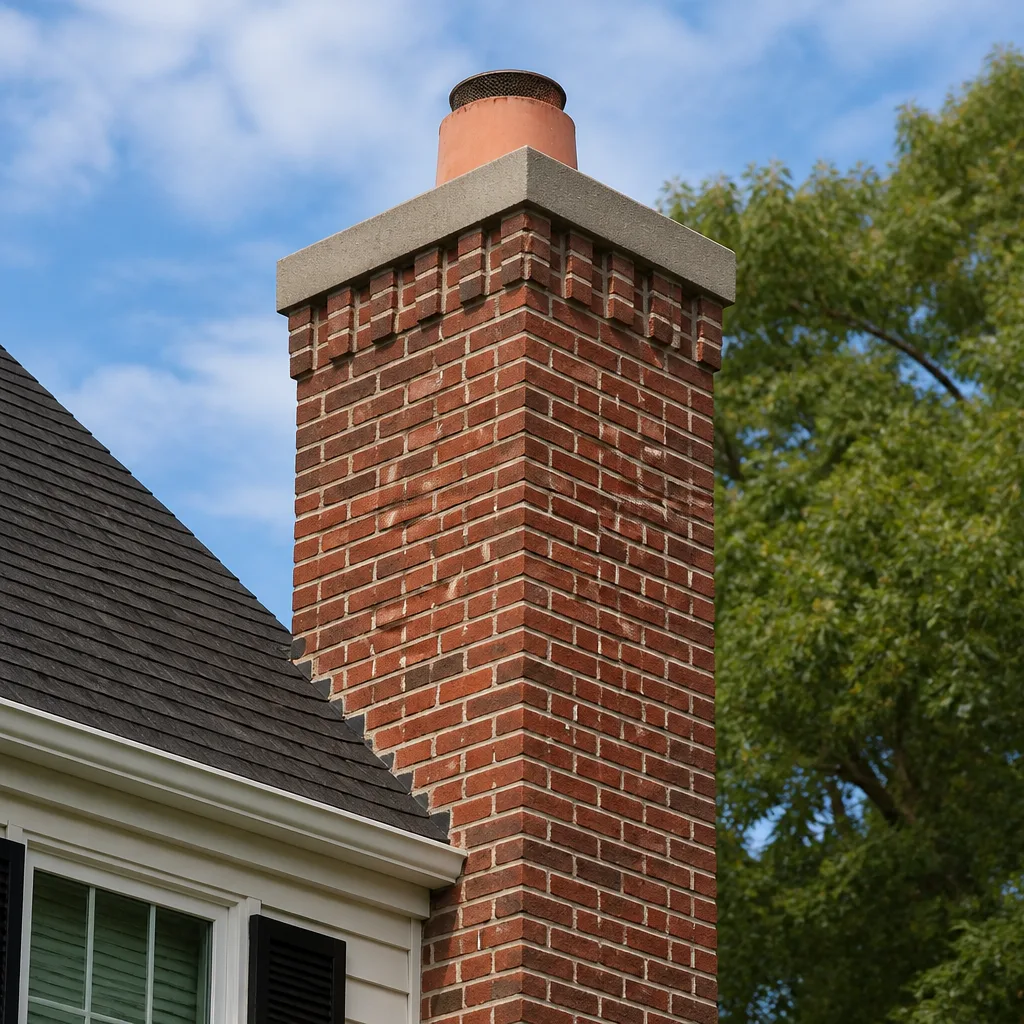 Masonry repair
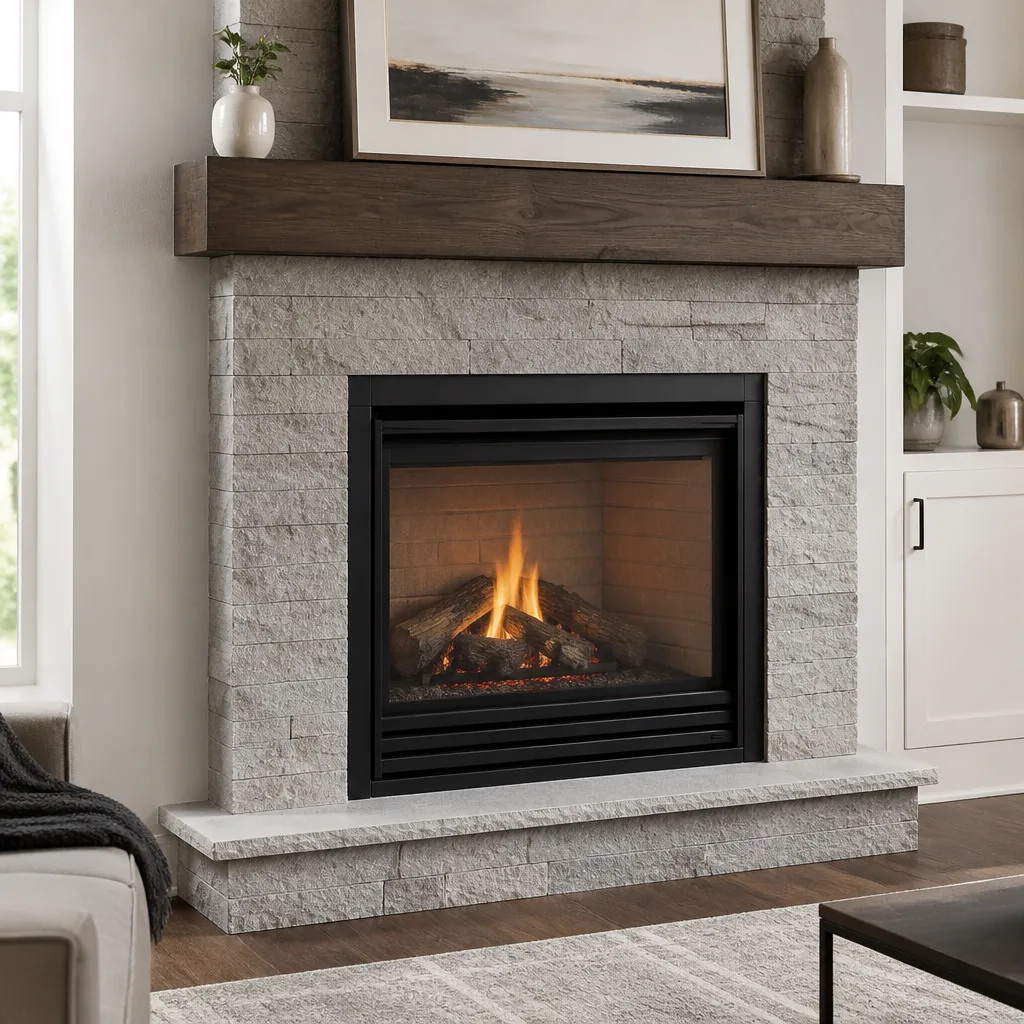 Gas fireplace service
Level 1 sweep and inspection to the NFPA 211 annual standard - flue, crown, cap, and flashing checked and photographed
Chimney sweep logs do not sweep chimneys. They loosen some creosote - which then falls where a brush and vacuum still have to collect it.
Seasonal Chimney Cleaning Care for Fayetteville: Year-Round Homeowner’s Guide
The chimney you ignore from March to October in Fayetteville is not sitting idle. Humidity, nesting starlings, and the freeze-thaw cycles that show up in January and February work on your mortar joints and liner while the fireplace sits cold. Most homeowners in Fayetteville treat chimney care as one task on a fall checklist, and that framing misses roughly eight months of quiet damage. A single annual sweep is necessary, but it’s not a plan. In this guide you’ll learn what actually happens to a chimney in Fayetteville through each season, why spring is the highest-value window for an inspection, how summer humidity treats terra cotta, and how to time fall so you’re not competing for an appointment the week of the first cold snap.
Quick Answer
Year-round chimney care in Fayetteville means four different jobs across four seasons, not one sweep in the fall. Spring is the best time for an inspection, because post-burn-season damage is fresh and animals haven’t nested yet. Summer is when you protect against moisture and nesting. Fall is for the sweep and any liner work, scheduled before the first cold snap. Winter is for monitoring and burning clean. Fayetteville’s short, unpredictable winters make the off-season months matter more than the heating months themselves.
Styles & brands we work with
- Sweep & inspection
- Caps & crowns
- Flue relining
- Masonry repair
- Gas fireplace service
Table of Contents
- Why Fayetteville Needs a Four-Season Chimney Plan
- Spring: The Highest-Value Inspection Window
- Summer: Humidity, Nesting, and What It Does to Terra Cotta
- Capping and Protecting the Flue During Long Non-Use Periods
- Fall Timing: Why Going Early Beats Going Late
- Winter in Fayetteville: Burning Clean and Catching Trouble Early
- The Four-Season Calendar at a Glance
- Common Mistakes to Avoid
Why Fayetteville Needs a Four-Season Chimney Plan
A chimney doesn’t stop aging when the fire goes out. It just ages more slowly and less visibly. Fayetteville’s climate is the reason a four-season framework fits better than the single-sweep habit most homeowners follow. Winters here are short and unpredictable. You might get two hard freezes in January and a mild February, or three straight weeks of overnight freezing. That inconsistency is exactly what makes the off-season months worth watching.
Two things happen in the typical Fayetteville year that a fall-only routine never addresses:
- Freeze-thaw movement in January and February. Masonry absorbs moisture. When that moisture freezes, it expands, and when it thaws it contracts. Each cycle widens the small cracks and pores in mortar joints a little more. A joint that looked fine in November can be noticeably crumbly by March.
- Spring through fall is the long vacancy. The fireplace sits cold for most of the year. That’s when moisture intrusion, animal nesting, and masonry spalling do their quiet damage, because nobody is looking up the flue and nobody is burning enough to notice a draft or a smell.
That’s the core argument for a seasonal plan. The heating season is when you use the chimney. The off-season is when the chimney decays. If you only think about it in October, you’re inspecting after eight months of unattended wear and calling it maintenance.
One more reason to spread the work across the year: an inspection is not the same task as a sweep, and neither is the same as a repair. Treating all three as one annual event is how homeowners end up either overpaying for work they don’t need or missing a problem that a spring visit would have caught cheaply. Our Delmar Chimney Sweep work is built around keeping those three clearly separate, so you know which one you’re paying for and why.
Spring: The Highest-Value Inspection Window
Spring is the single best time of year to have your chimney inspected in Fayetteville, and the reason is timing on both sides of the visit. On one side, you have just finished a full burn season. Whatever the winter did to the flue, the firebox, or the exterior masonry is still fresh and easy to identify. On the other side, you’re ahead of nesting season. Chimney swifts and starlings start scouting cavities in spring, and a chimney with an open or damaged cap is exactly what they’re looking for.
An inspection in spring catches the results of a whole heating season while they’re still small:
- Creosote deposits from the winter’s burns, which tell you how your burning habits and your wood supply are performing.
- Mortar joint wear that freeze-thaw movement over January and February opened up.
- Liner cracks or gaps that aren’t yet visible from the firebox but show up on camera.
- Damper and cap condition after months of weather on the roof.
Here’s the practical part: the inspection should produce a document, not just an opinion. A written report with photos or camera footage lets you see the flue for yourself and lets your insurance carrier or a buyer’s inspector see the same thing you did. That’s the difference between being told you need a reline and being shown why. For older masonry chimneys, the answer sometimes isn’t a full tear-out. HeatShield ceramic resurfacing can restore a qualifying damaged flue from the inside, extending the chimney’s life at a fraction of what a full reliner job costs. But that’s a determination that has to come from evidence, and spring is when the evidence is clearest.
One thing spring doesn’t fix: if you had a chimney fire during the winter, even a small one you put out yourself, the flue needs a professional look before you burn again. A chimney fire can damage a liner in ways that aren’t visible from below.
Summer: Humidity, Nesting, and What It Does to Terra Cotta
Southeastern North Carolina humidity is hard on a chimney, and the damage happens where you can’t see it. Terra cotta flue tiles are porous. They absorb moisture from humid air, and mortar joints between the tiles do the same. Over a long summer, that absorbed moisture does two things: it softens the mortar, and it sets up the freeze-thaw problem for the first cold nights in January. A flue that goes into winter already damp is a flue that’s going to spall.
What to look for from the ground and from inside the firebox during summer:
- Crumbling or sandy grit at the base of the firebox or on the smoke shelf. That’s often mortar or terra cotta shedding from above.
- White, chalky staining on exterior brick. This is efflorescence, and it means moisture is moving through the masonry.
- Rust on the damper or a musty, damp smell from the firebox. Both point to moisture that isn’t draining or drying.
- Birds, wasps, or squirrels getting into the flue. Listen for scratching or chirping, especially in the morning.
Summer is also when wildlife damage gets expensive. A bird nest alone is a fire hazard and a blockage. When starlings or chimney swifts build in an uncapped flue, the nest material can hold moisture against the liner and can be drawn into the smoke path the first time you light a fire in the fall. Removing it later is more involved than preventing it now.
This is also a good season to think about your wood supply. Wood that sits all summer under a tarp that traps moisture is wood that will burn wet in the fall. Stacked and covered on top only, with the sides open to air, it has a better chance of being ready when you need it. Poorly seasoned wood is one of the biggest contributors to creosote buildup over a winter, and creosote is what makes a chimney sweep necessary in the first place.
Capping and Protecting the Flue During Long Non-Use Periods
A chimney cap is the single most cost-effective piece of seasonal protection you can put on a chimney, and it’s the one homeowners most often skip. The goal is specific: keep rain, animals, and debris out of the flue without trapping moisture inside. A cap that does one but not the other makes the problem worse.
What a proper cap does for a Fayetteville chimney:
- Keeps water out of the flue. Rain entering an open flue wets the terra cotta and the smoke shelf and starts the freeze-thaw cycle early.
- Blocks animal entry. A mesh screen sized for the flue keeps birds, squirrels, and bats out while still allowing smoke and gases to escape.
- Keeps sparks and debris off the roof. A spark arrestor screen on the cap matters more than people realize on a shingled roof.
- Allows the flue to breathe. A cap must not seal the flue tight. Masonry needs to dry from the inside out, and a sealed or blocked flue traps moisture and accelerates the exact decay the cap was meant to prevent.
Materials matter here more than they do on most chimney components. A cheap cap off a hardware store shelf can rust out or warp within a couple of seasons. We source caps from professional chimney supply brands like Olympia Chimney and Gelco because those are the products the trade actually specifies, and they hold up to summer humidity and winter freeze-thaw without failing at the seams.
If your chimney currently has no cap, or a cap that’s bent, rusted, or missing its screen, that’s the first thing to address before summer. A cap installed well is a one-time fix that solves several seasonal problems at once.
Fall Timing: Why Going Early Beats Going Late
Every chimney sweep’s phone starts ringing the week of the first cold snap, and by then you’re competing with everyone else in Fayetteville for the same appointment slots. Scheduling the fall sweep in early autumn, before the first genuinely cold night, does two things. It gets you an appointment when you want one rather than whenever the schedule opens up, and it gives you time to catch a liner issue before it turns into an emergency call in December.
Here’s what a fall visit should cover, in order:
- Sweep first. You can’t assess a flue accurately through a season of creosote. The sweep clears the flue so the inspection shows what’s actually there.
- Assess honestly. Camera inspection after the sweep shows the liner, the joints, and the smoke chamber. This is where a lot of homeowners get pressured into unnecessary work, and it’s where an inspection that produces photos matters.
- Repair only what the flue actually needs. If the liner is sound, say so. If it needs restoration, explain why and show the evidence. Not every chimney needs a full reline. Some qualify for resurfacing. Some just need a cap and a new damper.
Fall is also when offset or older chimneys with irregular flues tend to reveal themselves. Those are the ones where a rigid liner won’t fit and a flexible system like DuraFlex is the professional standard, because it can navigate the offset without cutting into the masonry. Better to find that out in September, when it can be scheduled, than in late December, when it can’t.
If your fall sweep turns up repair work, that’s not a failure of the sweep. It’s the sweep doing its job. The chimney sweep is what makes an honest assessment possible, and honest assessment is the point of the whole seasonal framework.
Winter in Fayetteville: Burning Clean and Catching Trouble Early
Fayetteville winters are short but not gentle on the wrong chimney. The pattern here is a few hard freezes followed by mild stretches, then another freeze. That swinging back and forth is what stresses masonry, and winter is when the results start to show.
What to watch during the burn season:
- Smoke that doesn’t draft well. If the fireplace smokes into the room when you first light it, especially on cold mornings, something has changed in the flue or the cap. Don’t ignore it and don’t cover it with a fan.
- A strong or unusual smell when the fireplace is cold. A damp, smoky odor from a cold firebox in winter often means moisture or creosote is present and the flue isn’t drafting properly.
- Crumbling mortar visible from the ground. Look up at the chimney crown and the joints near the top. If you see brick dust or missing mortar, that’s freeze-thaw damage in progress.
- Any chimney fire, even a small one. A chimney fire can sound like a low roar or a series of pops. Even if it seems to go out on its own, have the flue inspected before you burn again.
Winter is also when you should burn clean. Seasoned wood, a hot fire rather than a long smoldering one, and not overloading the firebox all reduce creosote. So does not burning trash, cardboard, or treated lumber. Small habits over a winter make a real difference in how much work the spring inspection finds.
If something in your chimney changes during winter, get it looked at before the season ends. That’s what our chimney repair work is for, and a call in January is usually a much smaller job than the same problem in April.
The Four-Season Calendar at a Glance
Here’s the whole framework in one place, mapped to Fayetteville’s actual climate rather than a generic four-season template:
- Spring (March – May): Inspect. Post-burn-season damage is fresh, animals haven’t nested yet, and a camera report gives you a document you can act on. This is the highest-value visit of the year.
- Early summer (June): Cap and protect. Get the cap, screen, and damper sorted before the long humid stretch and before starlings and swifts settle in. Confirm the cap vents while it keeps moisture and animals out.
- Late summer (July – August): Watch the humidity. Check for efflorescence, rust, grit in the firebox, and animal sounds in the flue. Deal with your firewood supply so it’s dry for fall.
- Early fall (September – October): Sweep and assess. Schedule before the first cold snap and before the appointment squeeze. Sweep first, inspect honestly, repair only what the evidence supports.
- Winter (November – February): Burn clean, monitor, act early. Watch for drafting problems, odd smells, and visible mortar damage. If anything changes, get it looked at during the season rather than waiting for spring.
That’s the whole plan. One inspection in spring, one sweep in fall, seasonal protection through summer, and clean burning through winter. Most of the cost of chimney care over time comes from problems that were caught late, and most of those problems get caught late because nobody was looking between March and October.
Homeowners in Fayetteville can follow this calendar whether they own wood-burning fireplaces, gas inserts, or older masonry chimneys. Gas and insert setups still need annual attention, just different attention than a wood-burning flue. Our Fayetteville chimney care work covers all three because a seasonal plan that only works for wood burners isn’t a seasonal plan.
Common Mistakes to Avoid
- Treating chimney care as a fall-only task. The fall sweep is necessary, but the eight months between March and October are when moisture, nesting, and masonry decay do most of their damage in Fayetteville. A fall-only routine inspects the results of that damage instead of preventing it.
- Ignoring the cap. An uncapped flue takes on rain, birds, and debris all summer and starts the freeze-thaw cycle early. A cap with the right screen is one of the cheapest protections you can add.
- Sealing the flue too tight for the summer. A cover that traps moisture inside the chimney is worse than no cover at all. Masonry needs to dry from the inside out, so the cap has to vent.
- Scheduling the fall sweep after the first cold snap. The week of the first cold night in Fayetteville is the busiest of the year. You’ll wait, and you’ll get pushed further behind if any liner work turns up. Go early.
- Burning wet or unseasoned wood. Wet wood burns cool and smolders, which builds creosote faster than a hot fire. It’s the most common reason a chimney needs a sweep sooner than expected.
- Treating every inspection finding as urgent. Some chimney wear can safely wait until the next season. A trustworthy inspection tells you what’s urgent, what’s routine, and what doesn’t need doing yet, and shows you the evidence for each. If you’re told everything is an emergency, get a second look.
- Burning trash or treated lumber. Both put chemicals and creosote into the flue that a regular wood fire doesn’t. Over a winter it adds up to a much bigger sweep and a much bigger risk.
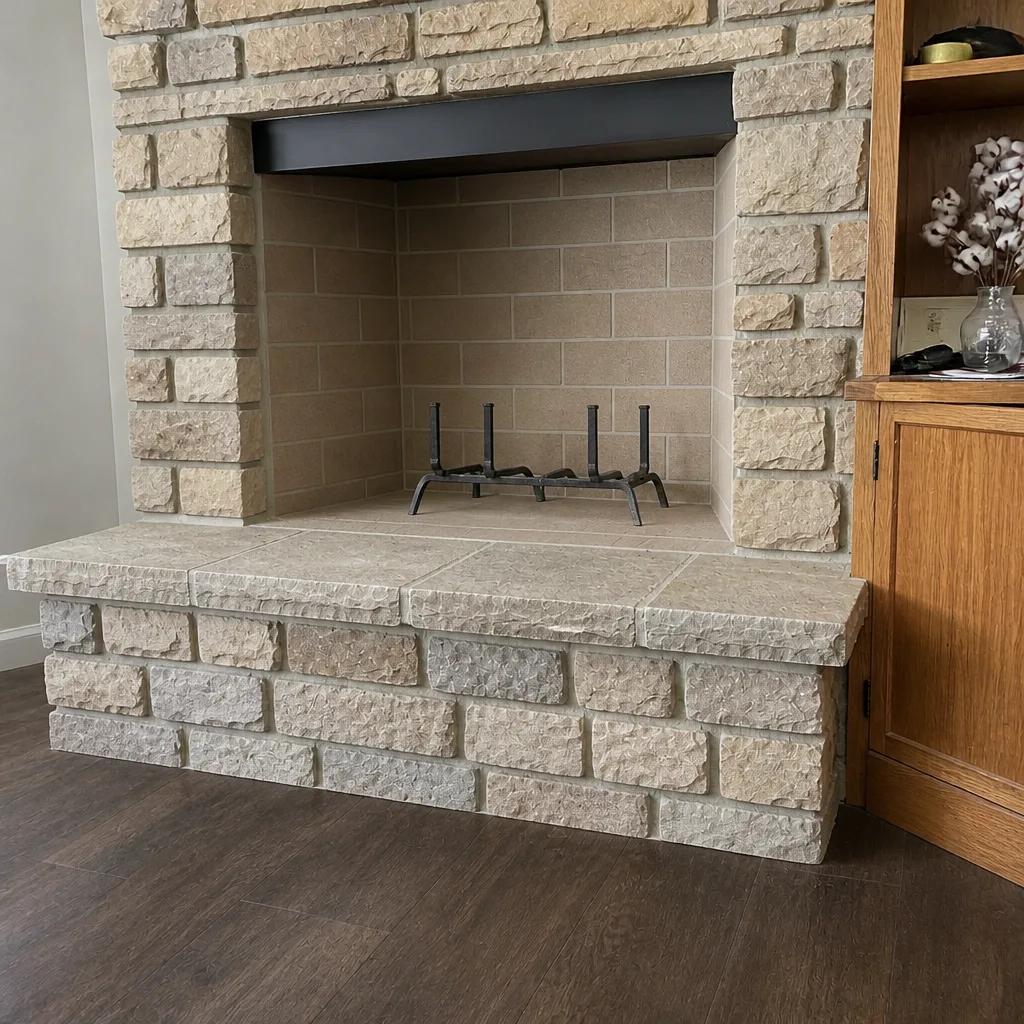
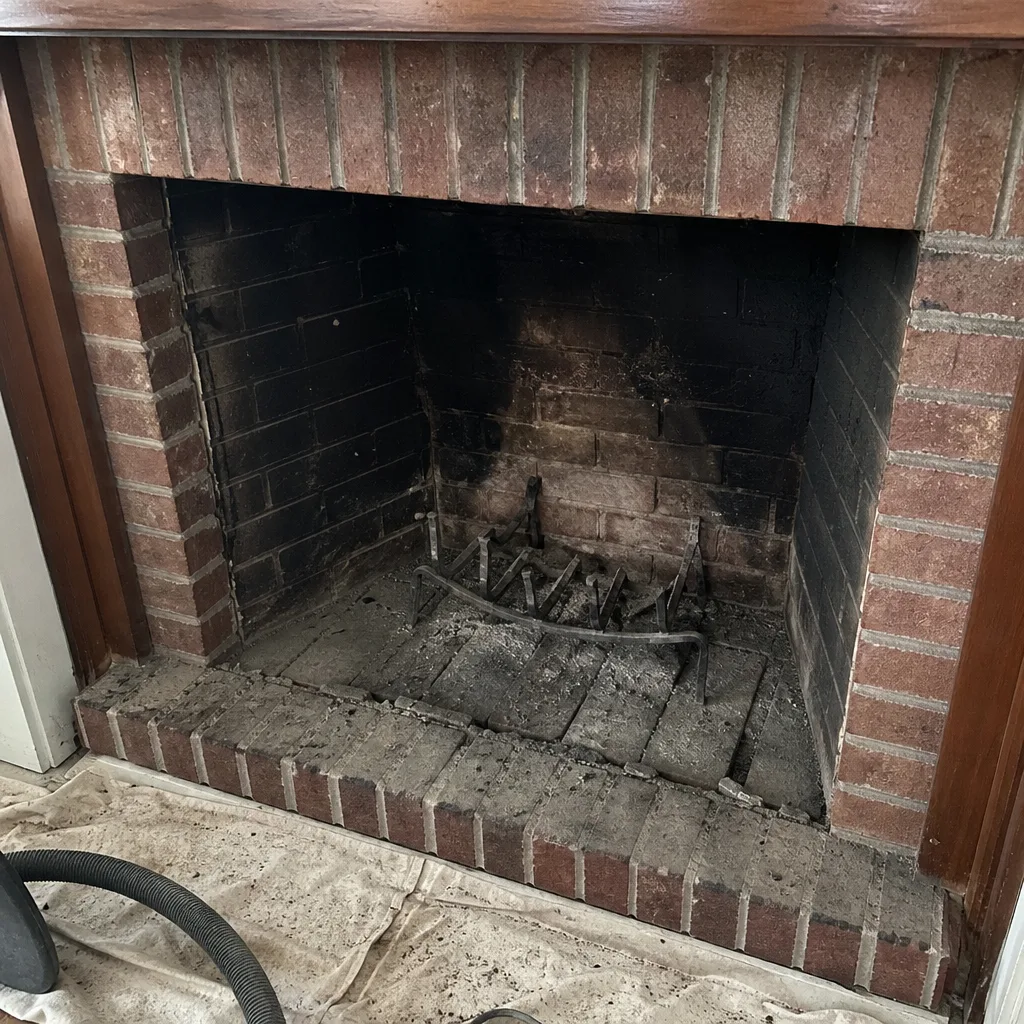
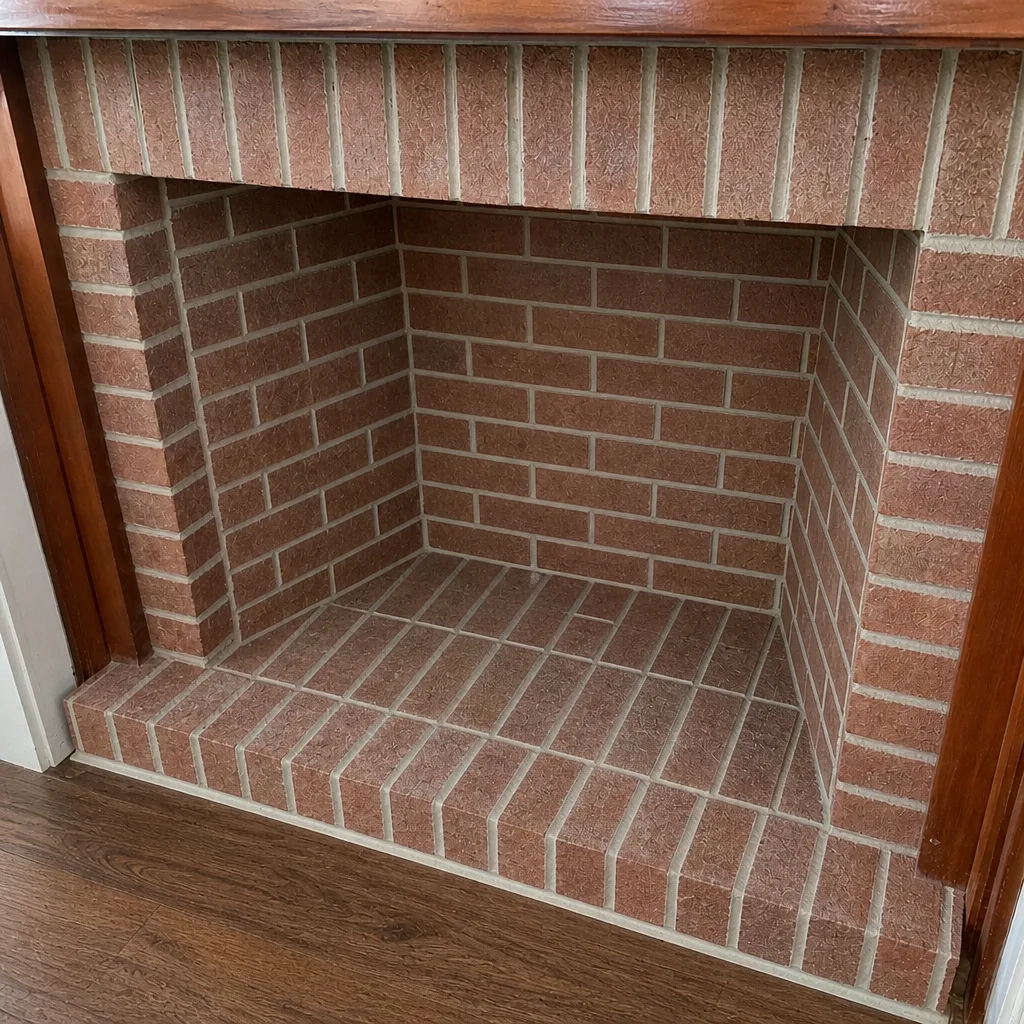
See the difference
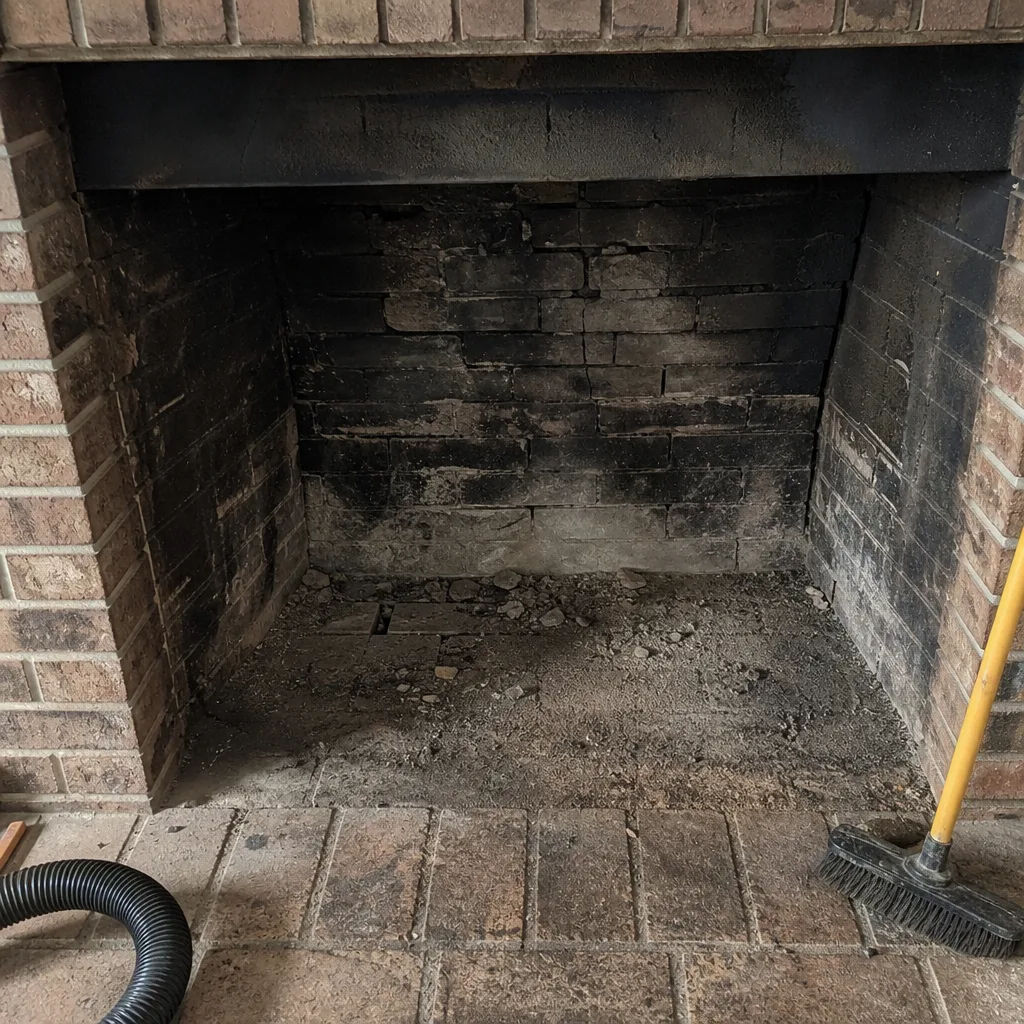 Before
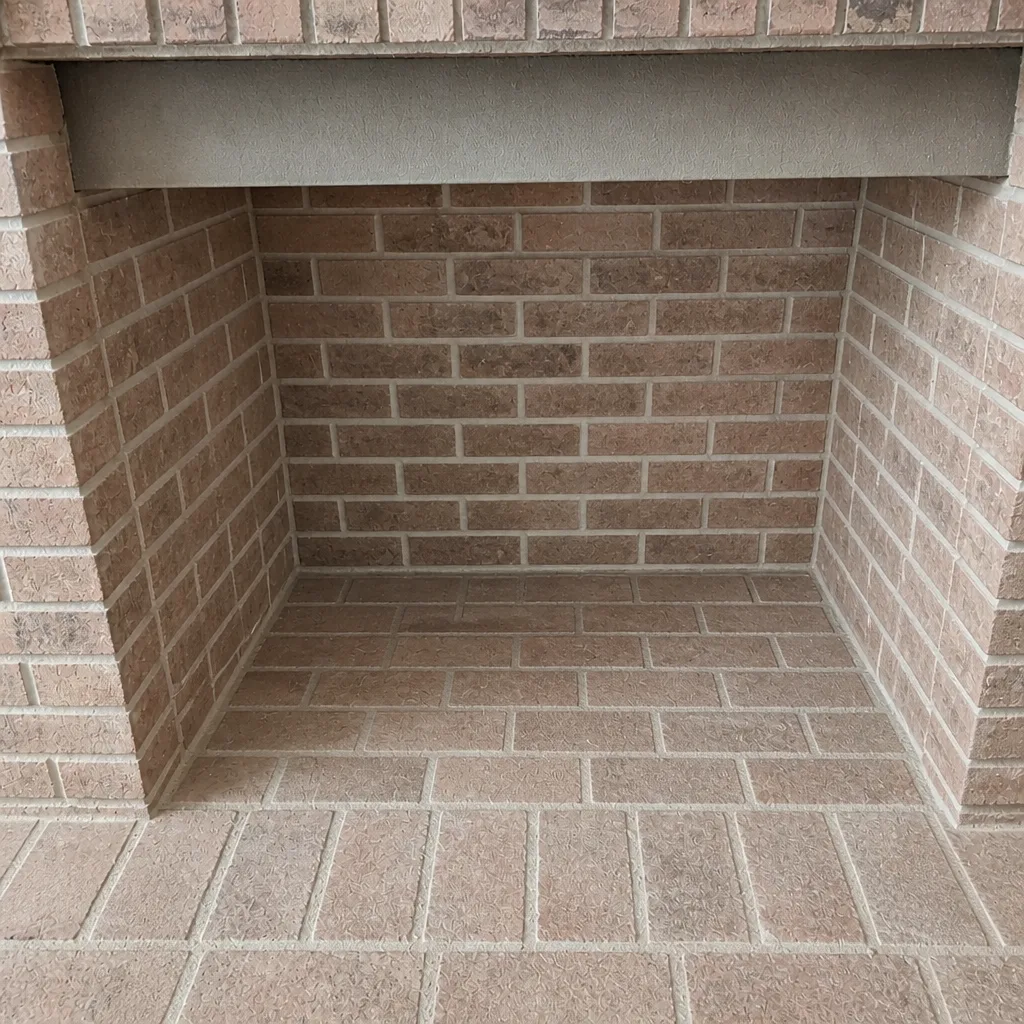 After
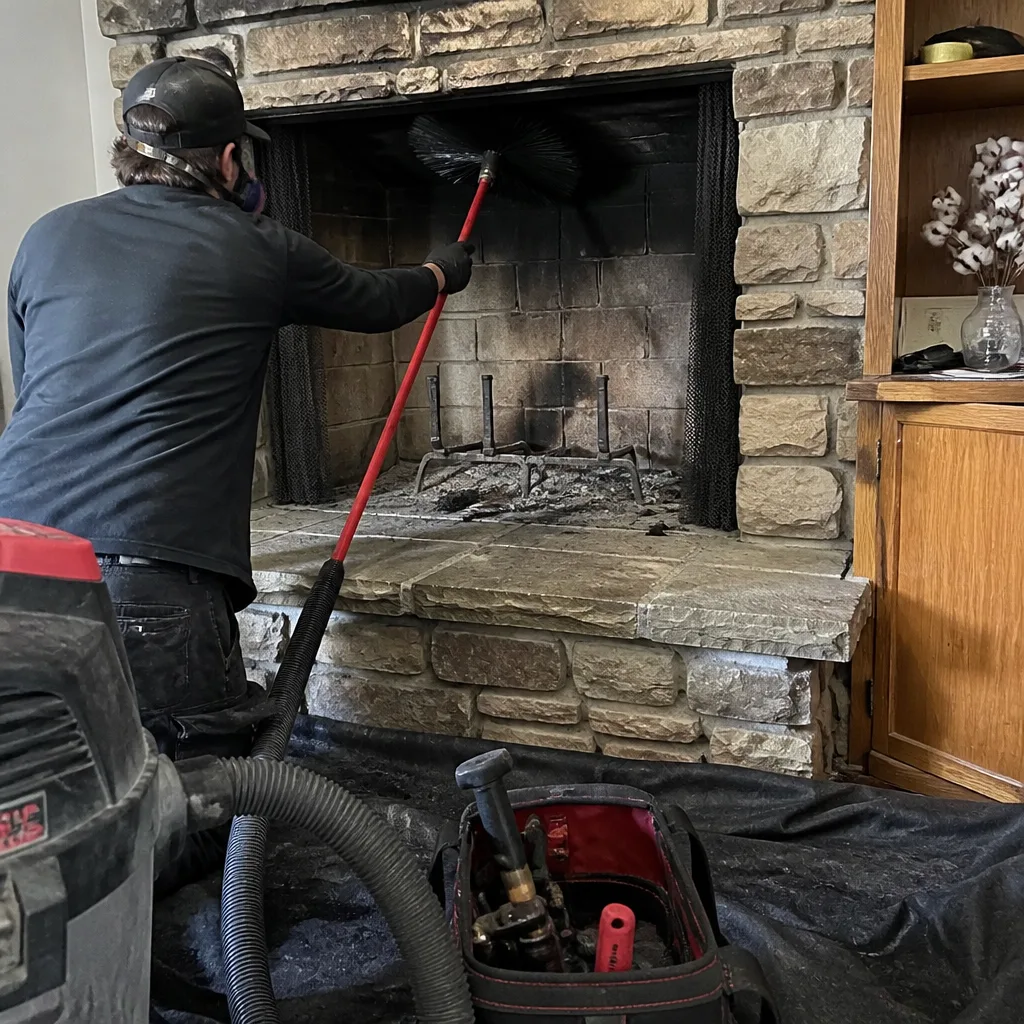 Before
 After
 Before
 After
When to Call a Professional
Call a professional chimney company in Fayetteville if any of these are true: you’ve burned through a full season without an inspection; you see crumbling mortar or efflorescence on the exterior brick; you hear birds or animals in the flue; you’ve had any chimney fire, even a small one; your fireplace smokes into the room when you light it; or you’re buying, selling, or insuring a home and need documented chimney clearance. Those are all cases where a camera inspection produces information you can’t get from the ground or the firebox. Delmar Chimney Sweep offers free estimates in Fayetteville. Call (855) 608-7738. We answer 24/7. Fast dispatch from 7am to 7pm, Sunday through Friday.
Frequently Asked Questions
A chimney should be swept once a year if you burn regularly, and inspected at least once a year whether you burn or not. Because Fayetteville winters are short, many homeowners burn less than they expect and still accumulate creosote at a rate that makes an annual sweep worth doing. The spring inspection and the fall sweep together cover both the use side and the off-season decay side, which is why we recommend both rather than one annual visit. Call (855) 608-7738 for an exact quote. Estimates are free.
Skipping chimney care doesn’t cause a dramatic failure. It causes quiet, cumulative damage that gets expensive to fix once it’s found. Creosote builds up and raises chimney fire risk, moisture moves through the masonry and starts spalling the brick and mortar, animals nest in an uncapped flue, and small liner cracks get wider with each freeze-thaw cycle. Most of the expensive jobs we see in Fayetteville started as something small that nobody looked at for three or four years. A sweep and inspection every year is much cheaper than the repair it prevents. Call (855) 608-7738 for an exact quote. Estimates are free.
Not every damaged liner needs a full reline. Some qualify for restoration with HeatShield ceramic resurfacing, which rebuilds the flue from the inside and extends the chimney’s life without tearing out the masonry. Others need a flexible DuraFlex liner system, especially older or offset chimneys where a rigid liner won’t fit. The answer depends on what the camera shows. Nothing should be recommended without photo evidence you can see for yourself, and if the flue is sound, you should be told that plainly. Call (855) 608-7738 for an exact quote. Estimates are free.
Spring is the best inspection window because it comes right after the burn season and right before nesting season. Post-winter damage is still fresh and easy to identify, and animals haven’t moved into the flue yet. A spring inspection gives you the whole off-season to schedule any repair work at a normal pace instead of squeezing it into the fall appointment rush. It also puts a documented inspection in your file before summer humidity and any summer storms add new wear. Call (855) 608-7738 for an exact quote. Estimates are free.
The answer is a proper chimney cap with a correctly sized mesh screen. The screen keeps birds, squirrels, and bats out while the cap allows smoke and gases to rise and moisture to escape. The mistake to avoid is sealing the flue tight for the summer. A chimney has to breathe, and a sealed or blocked flue traps humidity inside and speeds up masonry decay. We install caps from professional supply brands including Olympia Chimney and Famco because they hold up to Fayetteville’s humidity without failing at the seams. Call (855) 608-7738 for an exact quote. Estimates are free.
Yes. An inspection is a standalone, documented service, not a gateway to a repair sale. The report is written with photo or camera evidence so it can satisfy insurance carriers and real-estate transactions without a follow-up conversation. If you’re buying or selling a home in Fayetteville and need chimney clearance documentation, that’s a separate scope from a sweep or a repair, and you can book it on its own. Call (855) 608-7738 for an exact quote. Estimates are free.
The Bottom Line
Chimney care in Fayetteville works better as a four-season plan than as one fall appointment. Spring inspection catches post-winter damage and beats nesting season. Summer is for capping and watching humidity. Fall is for the sweep and any liner work, scheduled early. Winter is for burning clean and catching changes fast. The thread running through all of it is evidence: a camera inspection that gives you a document, a sweep that makes an honest assessment possible, and repair only where the flue actually needs it. Sweep first, assess honestly, repair only what the flue actually needs. That’s the whole framework, and it holds up season after season.
Ready to put your chimney on a seasonal plan? Call Delmar Chimney Sweep at (855) 608-7738 for a free estimate. We answer 24/7. Fast dispatch from 7am to 7pm, Sunday through Friday.
Written by the team at Delmar Chimney Sweep.