
Last updated November 15, 2026
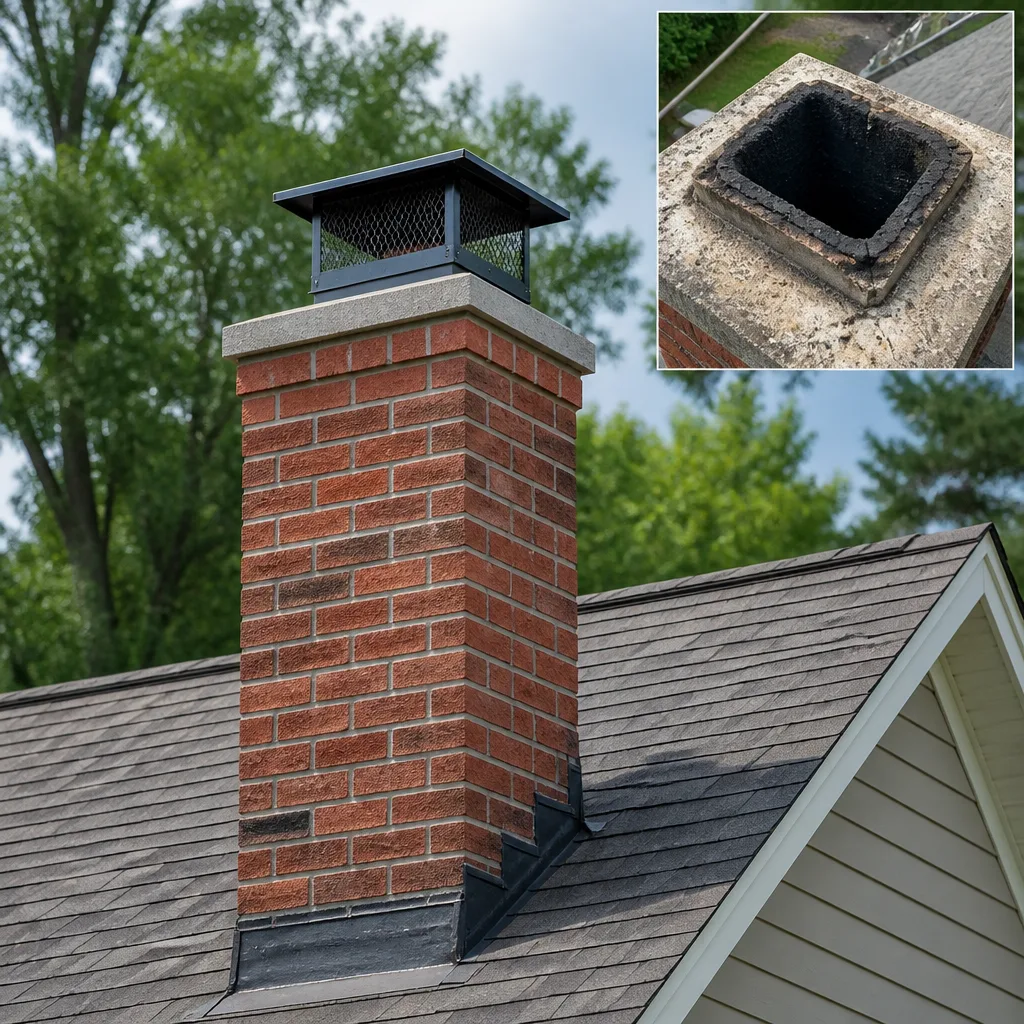 Sweep & inspection
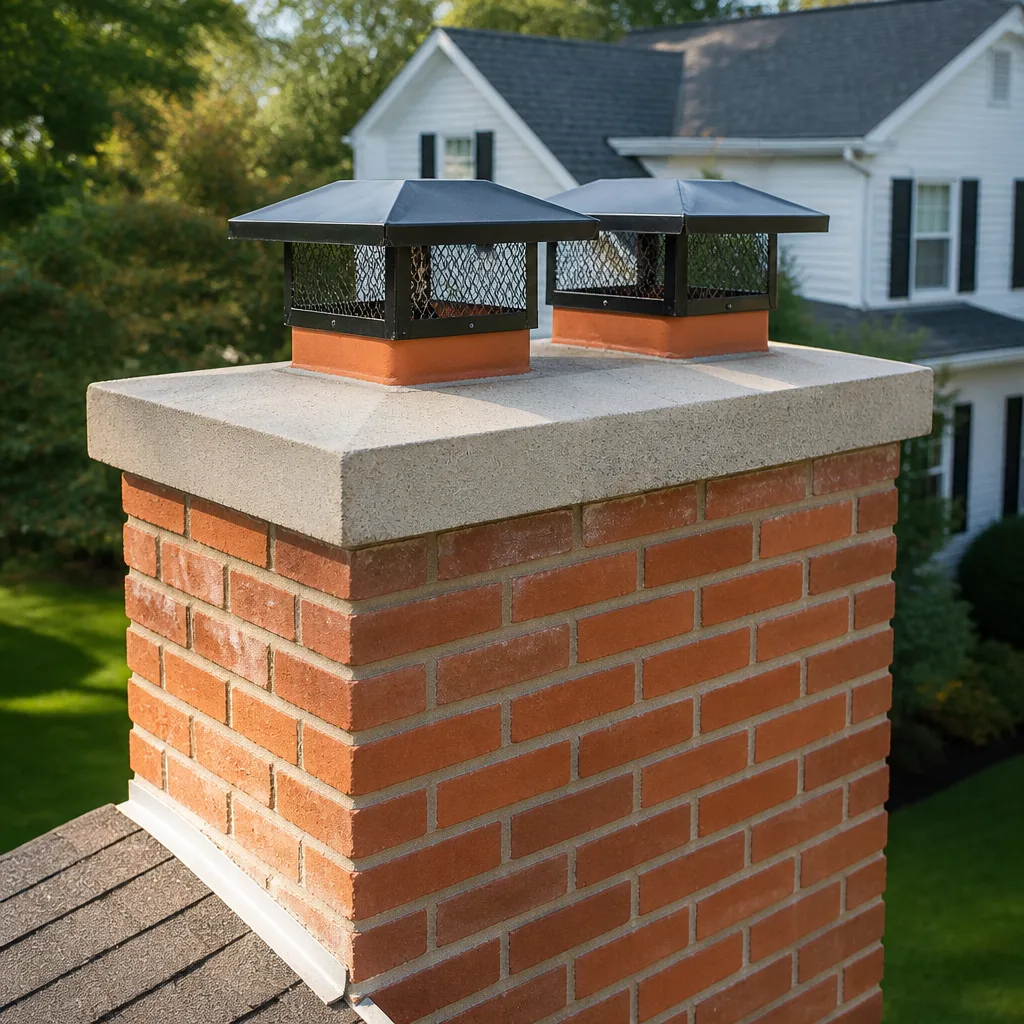 Caps & crowns
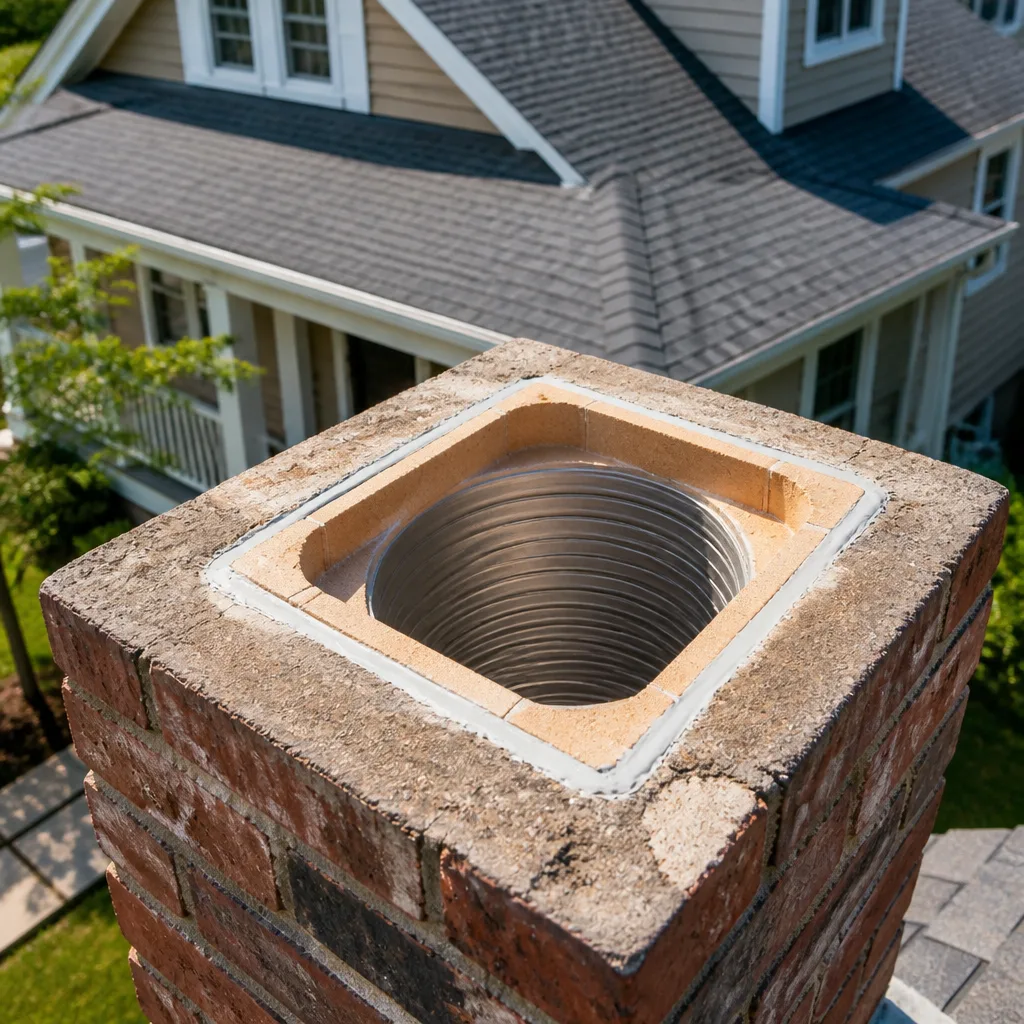 Flue relining
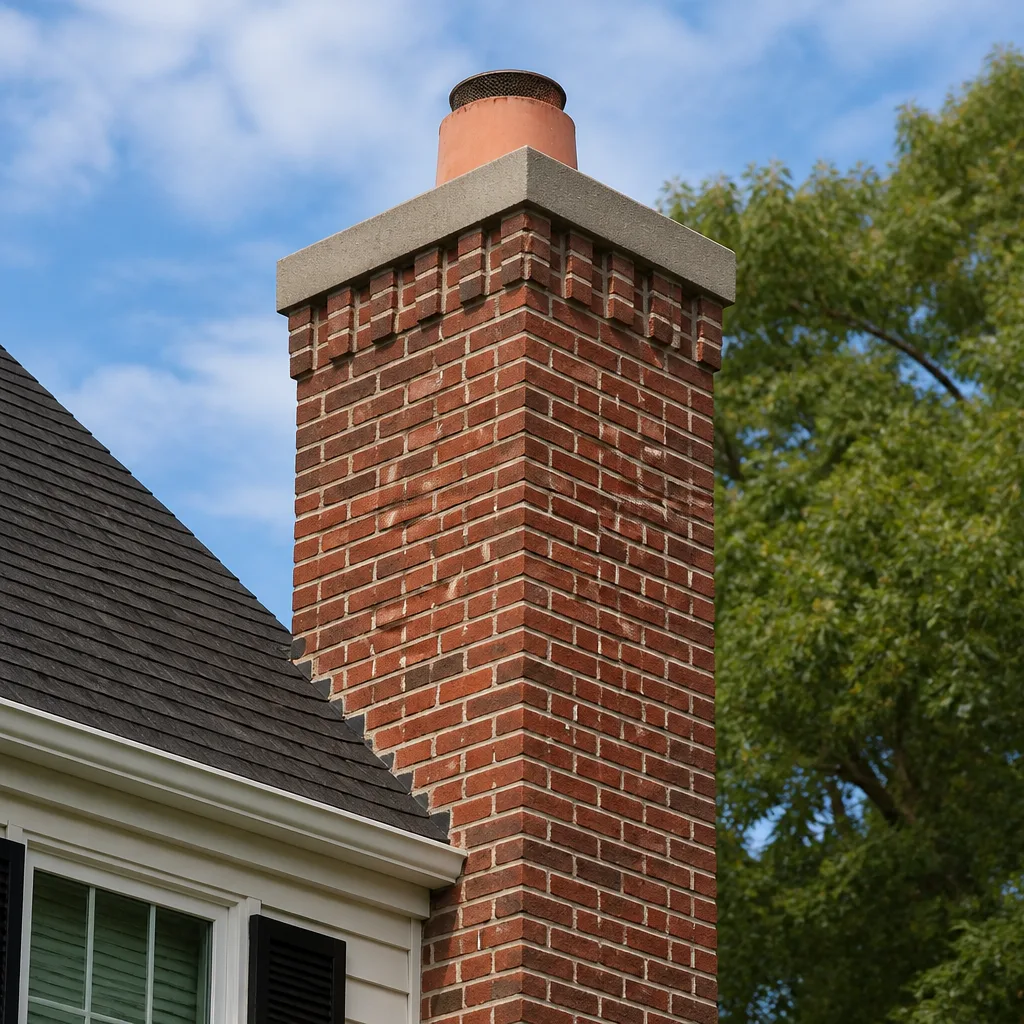 Masonry repair
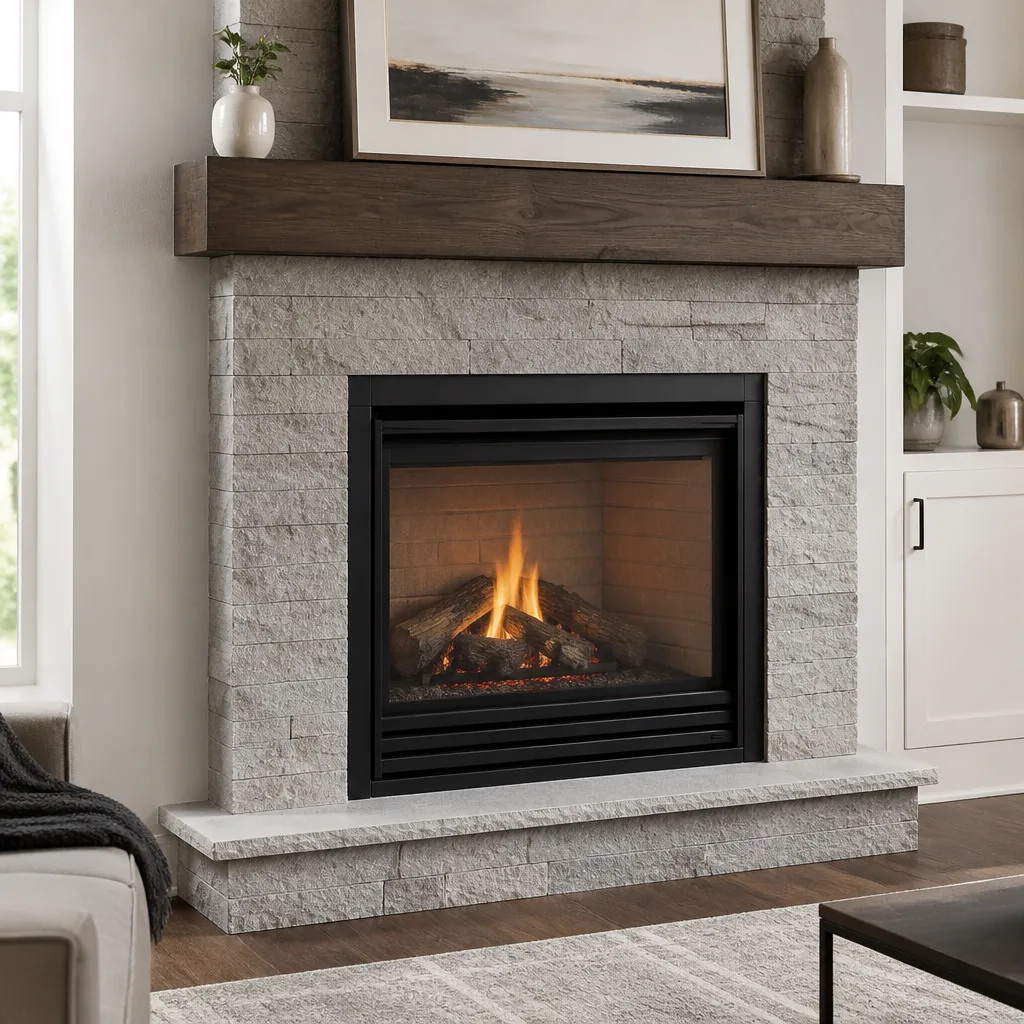 Gas fireplace service
Level 1 sweep and inspection to the NFPA 211 annual standard - flue, crown, cap, and flashing checked and photographed
Chimney sweep logs do not sweep chimneys. They loosen some creosote - which then falls where a brush and vacuum still have to collect it.
Chimney Cleaning Cost Breakdown: The Fayetteville Homeowner’s Reference for 2026
A $79 chimney cleaning special and a $349 cleaning are not the same service with different margins. They’re usually different services entirely. One is a brush down the flue and a wave goodbye. The other includes a staged assessment of what’s actually in the chimney, a proper level of inspection, and a written report you can hand to an insurance carrier or a buyer’s agent. The price difference lives in those details, not in the profit margin. This guide breaks down what a chimney cleaning invoice in Fayetteville should itemize in 2026, which factors push a job toward the higher end of the range, and how to compare bids on substance instead of the number at the bottom.
Quick Answer
A standard chimney sweep in Fayetteville in 2026 typically runs $175 to $350 for a wood-burning fireplace, with most single-story homes landing near the middle of that range. A Level 2 inspection, which adds a video scan of the flue interior, usually adds $125 to $275 on top. Repairs are quoted separately and should never be folded silently into a cleaning price. The written estimate always sets the final number.
Styles & brands we work with
- Sweep & inspection
- Caps & crowns
- Flue relining
- Masonry repair
- Gas fireplace service
Table of Contents
- What’s actually in a chimney cleaning invoice?
- What does chimney cleaning cost in Fayetteville in 2026?
- What pushes a cleaning toward the high end of the range?
- What’s the difference between a Level 1 and Level 2 inspection?
- What do liner and crown repairs cost when they’re actually needed?
- Why does the cheapest bid often skip the report you’ll need later?
- How do material brands signal cost-quality on a repair quote?
- How does a chimney sweep visit actually run, step by step?
What’s actually in a chimney cleaning invoice?
A credible cleaning invoice has three distinct line items, and you should be able to see all three before you pay. When they’re missing, the price is lower because the work is lower, not because the company runs leaner.
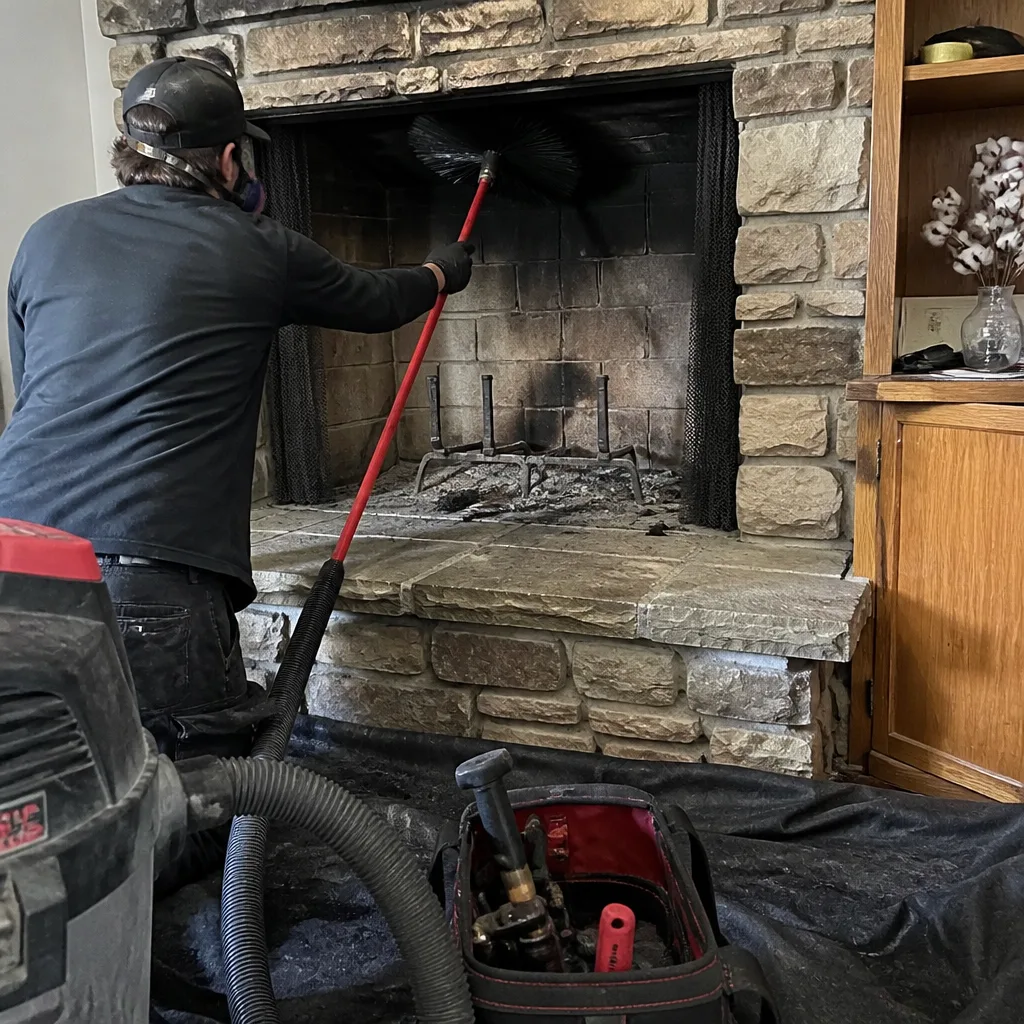
The first line is the sweep itself: mechanical removal of creosote and soot from the firebox, the smoke chamber, the damper shelf and the flue. The tools matter here. A rotary brush on a flexible rod reaches the full length of the flue and works the creosote off the walls rather than skimming the surface. A hand brush on a short handle does not. On a Fayetteville chimney that has seen several winters of pine and hardwood burns, that difference is real.
The second line is the inspection level. A cleaning visit usually includes a Level 1 inspection by default, which is a visual check of the accessible portions of the chimney, the firebox and the connector. It does not include a camera scan of the flue interior. If the technician finds signs that a camera is needed – heavy glazed creosote, a visible offset, a prior reline – the Level 2 gets quoted as a separate line, not tucked into the base price.
The third line is documentation. A proper sweep produces a written report of what was found, what was cleaned, and what condition the flue is in. That document matters if you ever sell the home, file an insurance claim, or need to prove compliance with your carrier’s inspection requirement.
What should trigger a separate quote:
- Any repair the technician recommends beyond sweeping
- A Level 2 camera inspection, when it wasn’t already scheduled
- Liner resurfacing or relining
- Crown or masonry work
- Cap replacement or chase cover repair
If a company hands you one lump number that includes the sweep and a list of repairs, ask for the breakdown. A sweep is a maintenance service. Repairs are a separate conversation with their own evidence.
What does chimney cleaning cost in Fayetteville in 2026?
Here’s where the money typically lands for a Fayetteville homeowner in 2026, broken out by line item. These are estimated ranges, and the written estimate on your specific chimney sets the final price.
| Service | Typical 2026 range | What drives the number |
|---|---|---|
| Standard chimney sweep (wood-burning, single flue) | $175 – $350 | Flue length, story count, creosote staging |
| Level 1 inspection (visual, included with many sweeps) | $0 – $75 when standalone | Whether it’s bundled with the sweep |
| Level 2 inspection (camera scan of flue) | $125 – $275 | Number of flues, roofline access, offset geometry |
| Liner resurfacing (HeatShield on qualifying flues) | $1,200 – $3,000 | Flue size, length, extent of damage |
| Full reline with a flexible liner (DuraFlex) | $2,800 – $6,500 | Flue height, offset complexity, liner diameter |
| Crown repair (minor crack sealing) | $250 – $600 | Crack extent, access |
| Crown rebuild | $800 – $1,800 | Crown size, whether the top courses need rebuilding |
Two things to notice in that table. First, the inspection and the sweep are separate concepts even when they’re billed together. Second, the repair ranges are much wider than the cleaning range, because repair pricing is entirely dependent on what the flue actually looks like. That’s the whole reason a camera scan comes before a repair quote.
For reference on what the sweep itself involves, our chimney sweep page walks through the tools and the process. If you’re comparing bids and one of them is dramatically below the low end of the range above, that’s the moment to ask what’s being left out.
What pushes a cleaning toward the high end of the range?
Four factors do most of the work. When two or three of them stack up on the same house, you’re at the top of the range before the technician has even looked up the flue.
- Flue height. A single-story ranch with a short exterior chimney is a fast sweep. A two-story colonial with a full-height flue takes longer, needs more rod sections, and requires roof access that’s done carefully. Height translates directly to labor time.
- Story count and roofline. A steep-pitch roof, a chimney on a valley, or a chimney that shares a wall with a dormer all slow the job down. Access is a real cost, not a hidden fee.
- Creosote staging. This is the biggest variable. Stage 1 creosote is a light, flaky soot that brushes off easily. Stage 2 is denser and takes more passes. Stage 3 is glazed, hardened creosote that a standard brush won’t remove at all – it requires chemical treatment or rotary cleaning over a longer session, and sometimes it means the flue needs a follow-up visit. A chimney that’s been run hot and dry for years stages differently than one that’s been smoldered through a slow burn of green wood.
- Fireplace type. A straightforward masonry wood-burning fireplace is the baseline. A gas insert changes the tools and the inspection approach. A factory-built fireplace with a prefabricated flue has its own cleaning requirements. An older masonry chimney with an offset flue is the most involved of the common setups.
In Fayetteville, homes with chimneys on the exterior wall of the house tend to run cooler than interior chimneys, which can accelerate creosote staging and push a cleaning toward multiple passes. Homes built before the 1980s with original masonry flues also tend to arrive at a sweep with more buildup than a newer home with a lined flue.
What’s the difference between a Level 1 and Level 2 inspection?
A Level 1 inspection is a visual check of accessible components. A Level 2 inspection adds a camera scan of the flue interior, and it’s the one you need before a real-estate transaction, after a chimney fire, or whenever there’s a change in fuel type or a suspected problem. They cost different amounts because they’re different services.
Level 1 inspection: This is what comes with a routine annual sweep. The technician looks at the firebox, the damper, the smoke chamber, the visible portions of the flue, the cap and the crown. It’s done with a flashlight and a mirror and doesn’t disturb the chimney. It answers the question “does anything look wrong from the outside?”
Level 2 inspection: This one uses a camera on a rod, fed up the flue to examine the interior surface of the liner end to end. It finds things a visual check can’t see – cracks in the liner, gaps at joints, separation between flue tiles, offset transitions, and the actual condition of the flue behind the smoke chamber. It produces video and still images you can keep. This is the level that real-estate transactions and most insurance carriers want to see.
Both are documented services. An inspection should give you a paper or digital report, not just a technician’s verbal opinion. If a company tells you the flue is bad but can’t show you a photo of what they saw, that’s not an inspection – that’s a sales pitch.
Our Fayetteville service area work regularly produces Level 2 reports for buyers, sellers and property managers who need documentation for a transaction. Inspection work at Delmar Chimney Sweep is treated as a standalone service so it can be used for those purposes without a repair pitch attached to it.
What do liner and crown repairs cost when they’re actually needed?
Liner repair in Fayetteville in 2026 typically runs $1,200 to $6,500 depending on whether the flue can be resurfaced or needs a full reline. Crown repair runs $250 to $1,800 depending on whether it’s a crack sealing job or a rebuild. The key word in both is “needed” – and the only way to know is to look inside the flue and read the exterior condition.
There are two paths for a damaged liner, and they sit at different price points for good reasons.
- Resurfacing: HeatShield ceramic resurfacing is a poured or troweled ceramic product that restores a damaged flue interior from the inside without tearing out the chimney. It qualifies on flues where the damage is surface-level – cracked or spalled clay tile, joint gaps, a rough interior – but where the flue structure itself is still sound. The cost sits at the low end of the liner range. It’s a technique most generalist handymen can’t source or apply correctly, which is worth knowing when a quote is unusually low.
- Full reline: When the flue’s structure is compromised or the geometry won’t allow resurfacing, a new liner goes in. DuraFlex flexible liner systems are the professional standard for retrofits on offset flues and older masonry chimneys where a rigid liner won’t fit. That geometry is common in Fayetteville’s older neighborhoods, where a straight-shot flue from the firebox to the cap is the exception rather than the rule. The cost sits at the high end of the liner range because the work is more involved.
Crown work splits the same way. A minor crack in the crown gets sealed before water gets behind it – $250 to $600. A crown that has separated from the flue, or that has multiple deep cracks and has been letting water into the chimney for years, needs to be rebuilt. That’s $800 to $1,800. In a climate that sees hot humid summers and regular freeze-thaw swings in winter, a crown that isn’t sealed will fail faster than the same crown in a dry climate.
Our chimney repair work always starts with the camera. No liner recommendation without a photo of what’s wrong. If a flue can safely wait another year before resurfacing, we say so.
Why does the cheapest bid often skip the report you’ll need later?
The cheapest bid usually leaves out the inspection and skips the documentation. That’s not always a scam – it’s a different scope of work, priced honestly for what it includes. The problem shows up six months later, when you’re selling the home and the buyer’s agent asks for a chimney report you don’t have.
Here’s the chain that catches homeowners:
- The $79 or $99 cleaning happens. The flue gets brushed, the firebox gets vacuumed, the technician leaves. No report.
- Two years later, you list the house. The buyer’s inspector flags the chimney and the buyer asks for documentation of the last cleaning and inspection.
- You don’t have it. So you pay for a Level 2 inspection on top of the $79 you already spent, and if anything’s found, the repair conversation happens under deadline pressure.
- Or you file a chimney-related insurance claim, and the carrier asks for proof of maintenance. Same problem.
A cleaning priced at the middle of the range that includes a written report is often cheaper than two separate services bought at different times. And the report exists whether you need it or not.
Ask directly before booking: “Does the price include a written report of what was found?” If the answer is vague, that’s your answer. A chimney sweep should give you a document, not just an opinion.
How do material brands signal cost-quality on a repair quote?
When you’re comparing two repair estimates that differ by $800, the products named in the quote are often the fastest way to understand the gap. Not every professional-grade brand is universally better than every generic one, but the presence of an industry-standard product in a quote tells you the contractor knows what the trade actually specifies.
Some brands you’ll see in a serious quote:
- DuraFlex – flexible stainless liner systems used for retrofits in older or offset flues where a rigid liner won’t fit.
- HeatShield – ceramic resurfacing product used to restore damaged flue interiors without a full reline.
- Olympia Chimney – liner systems and venting components.
- Famco – caps, dampers and related chimney components.
- Copperfield – caps, chase covers and exterior chimney products.
- Gelco – sealants and related chimney products.
You don’t need to know how each brand differs in construction. You need to notice whether the quote names a specific product at all. A quote that just says “new liner” with a dollar figure is a quote you can’t compare to anything. A quote that names the liner system, the crown material and the cap product is a quote you can price-shop on substance.
We work with an intentional roster of trade-grade material brands – DuraFlex, HeatShield, Olympia Chimney, Famco, Copperfield and Gelco among them – because those are the products certified chimney institutes actually specify. Not because they’re on sale. For a full look at how we scope this work, the chimney repair page covers the sequence.
How does a chimney sweep visit actually run, step by step?
Knowing the sequence makes it easier to evaluate bids, because you can see which steps a low quote is leaving out. Here’s what a proper Fayetteville sweep involves from the moment the technician arrives to the moment the report is in your hand.
- Arrival and setup. Drop cloths go down around the hearth. A high-efficiency vacuum with HEPA filtration runs for the entire visit so no soot escapes into the room. If the technician doesn’t set up a vacuum before touching the firebox, that’s a problem.
- Pre-sweep inspection. The technician looks at the firebox, damper, smoke chamber and the visible portions of the flue before cleaning. This is the Level 1 inspection, and it happens before the brush goes up.
- Firebox and smoke chamber cleaning. Soot and creosote are removed from the firebox walls, the damper shelf and the smoke chamber above the damper. The smoke chamber is the most commonly skipped portion of a sweep, and it’s the one that collects the most stubborn deposits.
- Flue sweep. A rotary brush on a flexible rod goes up the flue from the bottom or down from the top, depending on access. The brush works the full length of the flue, not just the first few feet.
- Post-sweep assessment. With the flue clean, the technician can actually see the interior surface. This is where the difference between a flue that’s sound and one that’s cracked shows up. If the interior needs a camera, this is when the Level 2 gets recommended.
- Cap and crown check. The exterior of the chimney gets a look too. A cracked crown, a damaged cap, or a missing spark arrestor screen all show up here.
- Report and handoff. The technician walks you through what was found, what was cleaned, what condition the flue is in, and what (if anything) needs attention. You get a written report. If repairs are recommended, they’re quoted separately, with photos.
None of this is exotic. It’s the standard sequence for a professional sweep. The question to ask when comparing bids is which of those seven steps the $99 quote includes.
Common Mistakes to Avoid
- Booking on price alone without asking what’s included. A cleaning that skips the smoke chamber or the post-sweep assessment isn’t cheaper – it’s incomplete. Ask upfront whether the price includes a written report and a Level 1 inspection.
- Accepting a repair quote without seeing photos. Any recommendation for liner work, crown work or masonry repair should come with images of what’s actually wrong. If you can’t see the evidence, don’t authorize the work.
- Skipping the annual sweep because the fire “looks fine.” Creosote staging isn’t visible from the firebox. A flue can hold a dangerous amount of buildup without the fire showing any sign of it. Annual sweeping is the only way to catch it before it becomes a chimney fire risk.
- Burning green or unseasoned wood to save money. It produces more creosote per cord than seasoned hardwood, which means a Fayetteville flue that should clean easily stages into denser creosote faster. The savings on the wood get eaten by the extra cleaning cost.
- Hiring a generalist handyman for liner work. Liner installation requires specific products from the trade supply chain – DuraFlex, HeatShield and the like – and correct installation under manufacturer specification. A handyman can’t source or install those systems correctly, and a failed liner is a bigger bill than the original repair.
- Bundling a cleaning and a major repair on the same invoice without separating the line items. Cleaning and repair are different services with different evidence requirements. If a company won’t break them out, that’s a red flag.
- Ignoring the crown until water gets in. A $250 crown sealing job today prevents a chimney rebuild later. In Fayetteville’s freeze-thaw winters, water that gets behind a cracked crown does its damage fast.
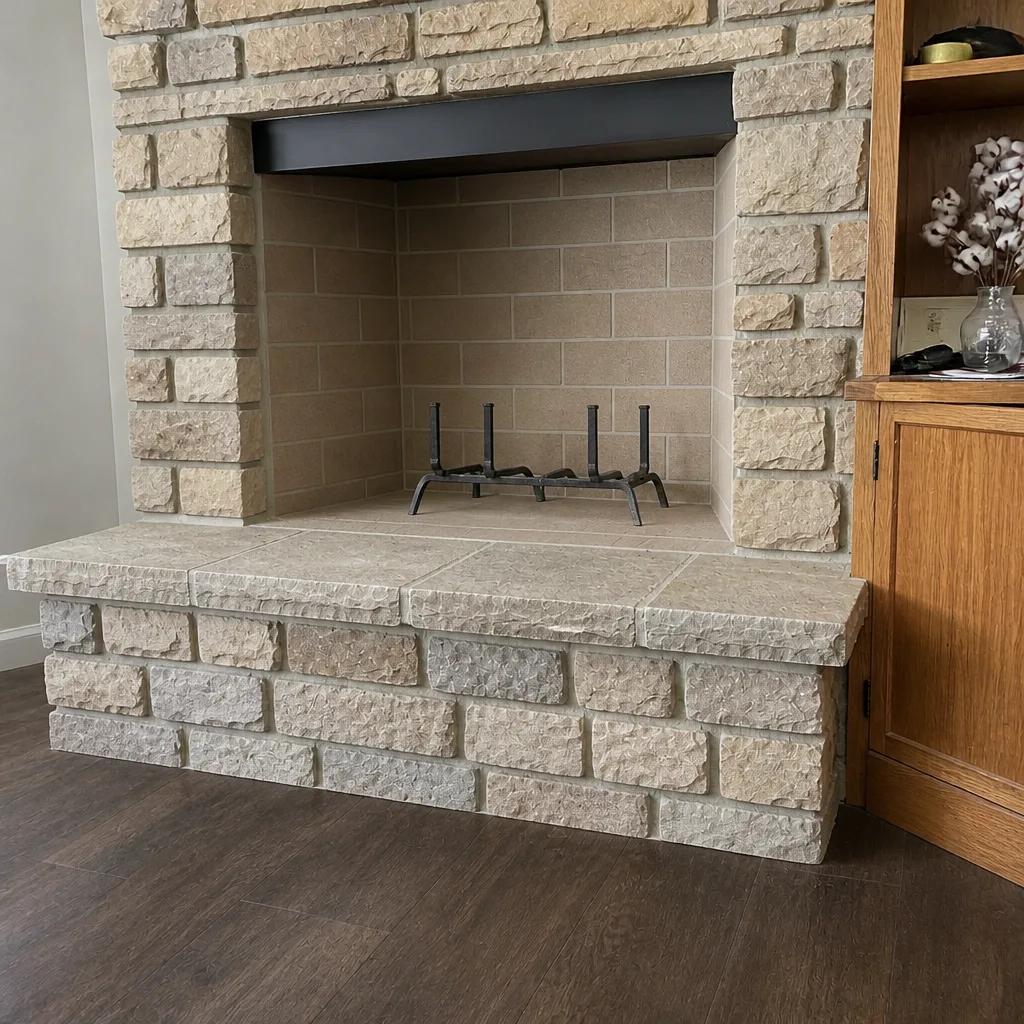
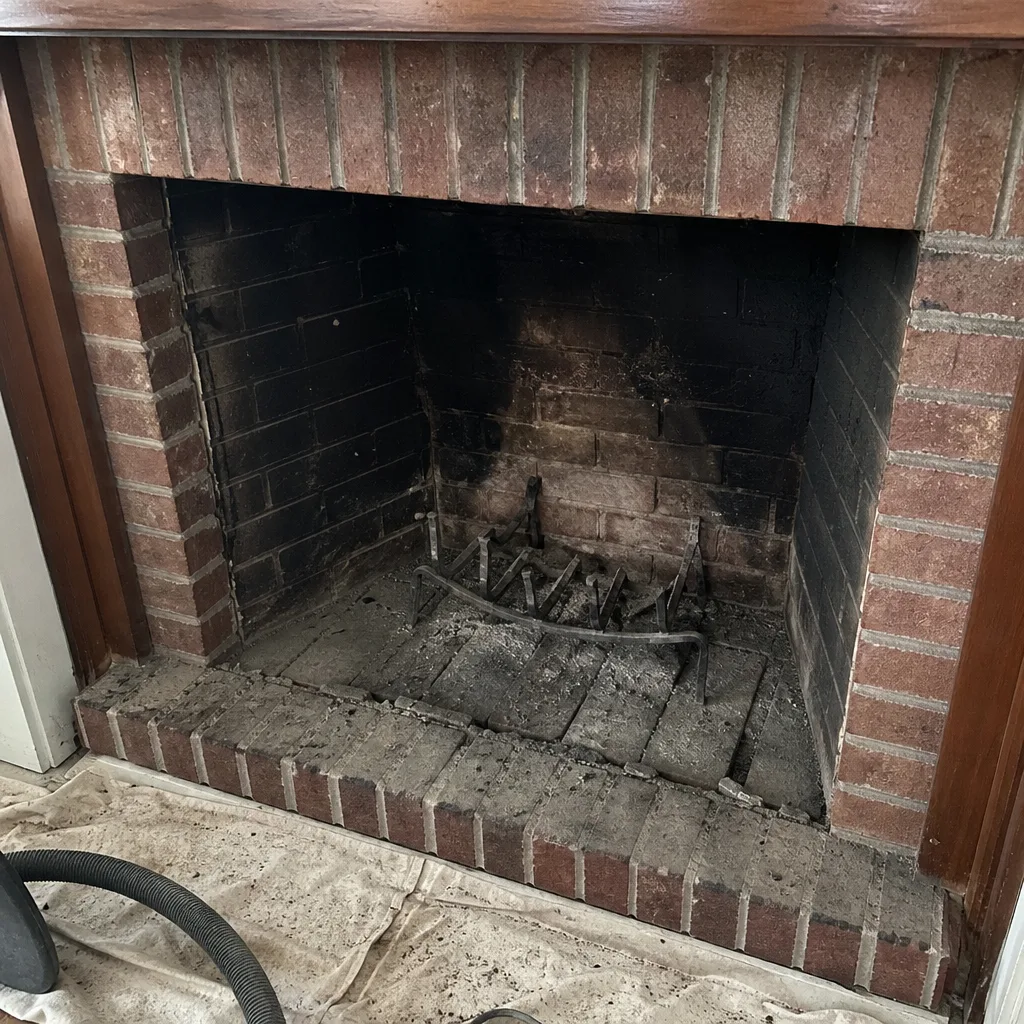
See the difference
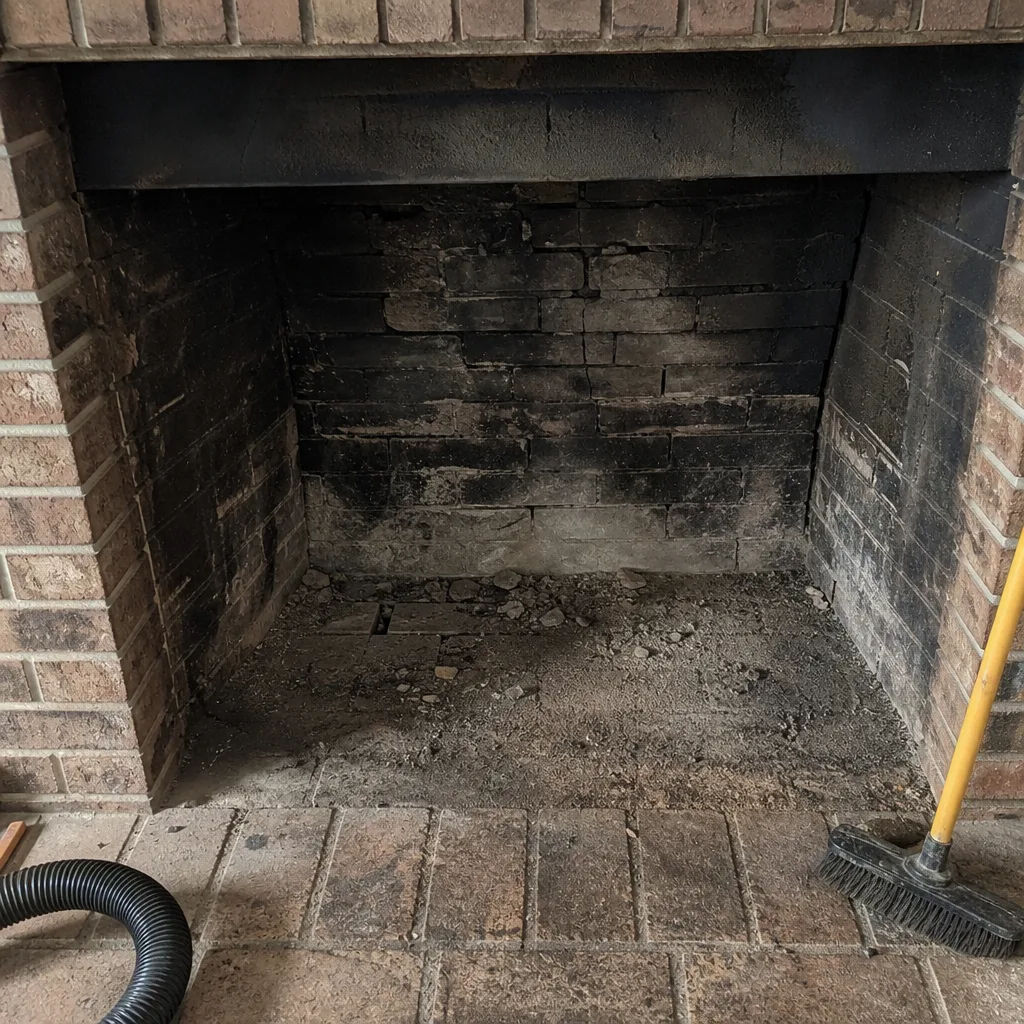 Before
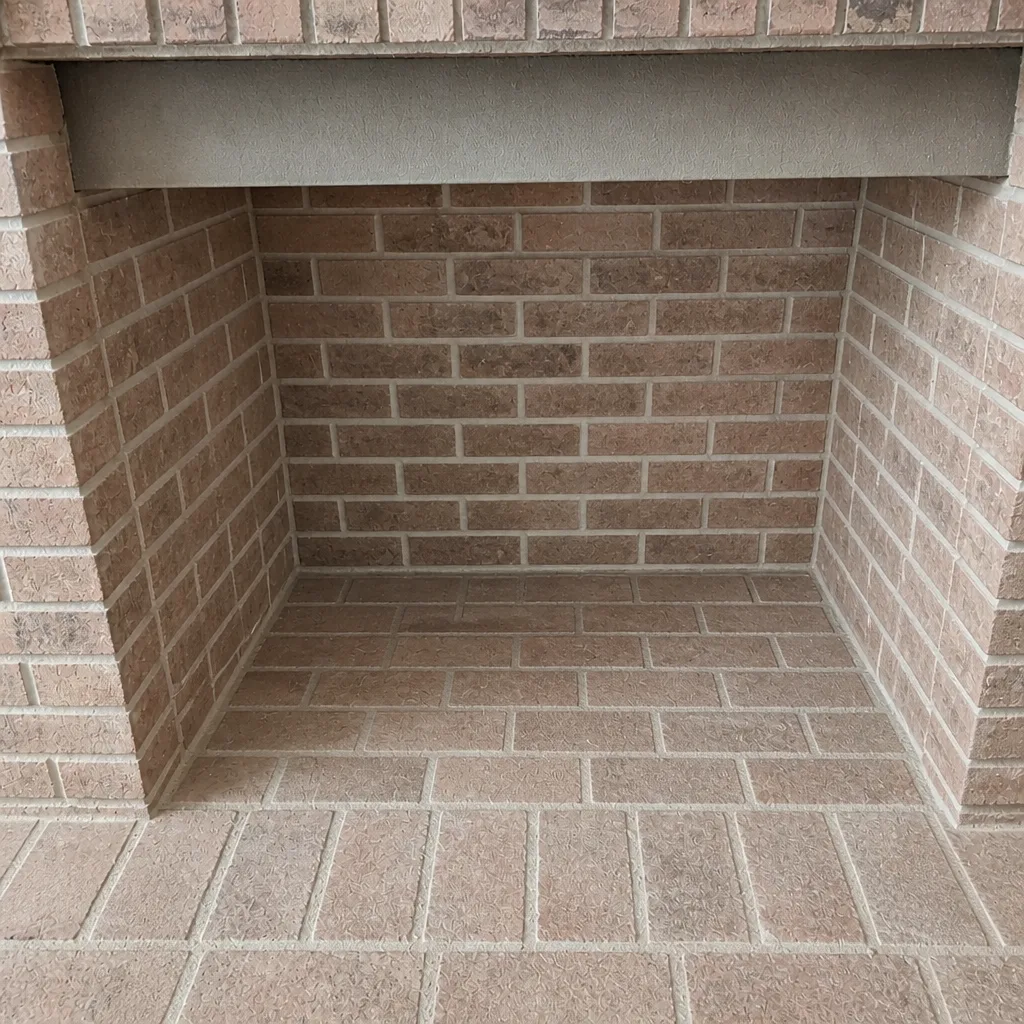 After
 Before
 After
 Before
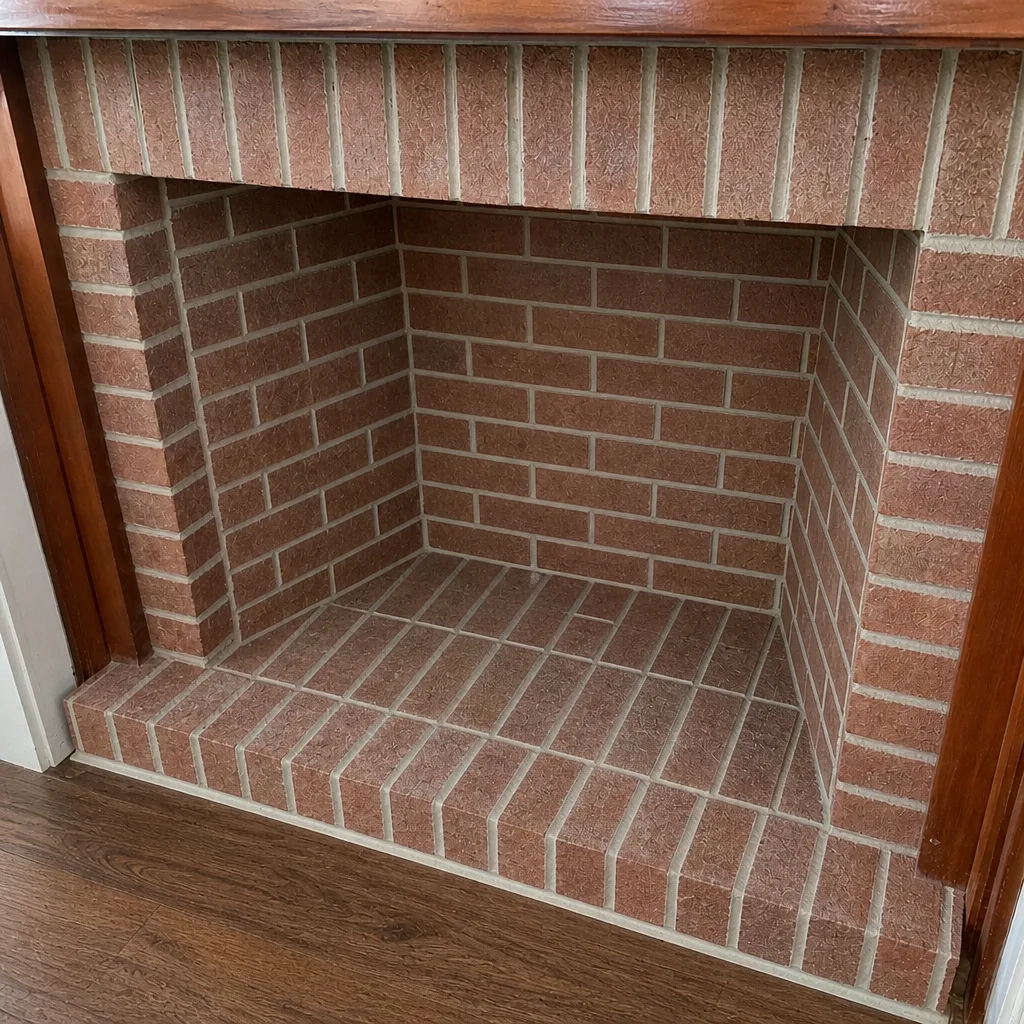 After
When to Call a Professional
Some chimney issues announce themselves. Others don’t, and those are the ones that matter. Call a professional if you smell a strong creosote odor in the house, if smoke rolls back into the room when the fire is lit, if you see cracked or missing mortar on the chimney exterior, if the cap is loose or missing, or if it’s simply been more than a year since the last sweep.
If your fireplace is a gas insert or a factory-built unit, the same annual inspection applies. Those systems have their own venting requirements, and a visual check by a trained technician catches what a homeowner can’t see from the hearth.
If you’re buying or selling a home in Fayetteville, a Level 2 inspection before closing is the cheapest insurance in the transaction. It produces documentation the buyer’s lender and the seller’s carrier can both use.
Delmar Chimney Sweep offers free estimates in Fayetteville – call (855) 608-7738. We answer 24/7. Fast dispatch from 7am to 7pm, Sunday through Friday. Our technicians have up to experience, and every visit starts with a sweep, an honest assessment, and repairs only where the flue actually needs them.
Frequently Asked Questions
A standard chimney sweep in Fayetteville typically costs $175 to $350 in 2026, with most single-story homes landing in the middle of that range. Flue height, story count, creosote staging and fireplace type all move the number. Call (855) 608-7738 for an exact quote – estimates are free.
Only if the camera scan shows damage the flue can’t safely run with – cracked tiles, separated joints, a compromised interior surface. Plenty of flues can be resurfaced with HeatShield rather than fully relined, which costs significantly less. Nothing should be recommended without a photo you can see for yourself. Call (855) 608-7738 and we’ll walk you through what the scan shows.
Once a year for a wood-burning fireplace that sees regular use. That’s the baseline schedule for most households. A fireplace used only occasionally can sometimes stretch to every other year, but only after an inspection confirms the buildup is minimal – it’s not a default. Call (855) 608-7738 to book a sweep and get a straight answer on your specific chimney.
Creosote accumulates on the flue walls, and at Stage 3 it becomes a glazed, hardened fuel source that can ignite. That ignition is a chimney fire – a real hazard, not a scare tactic. Stage 3 creosote is also much harder and more expensive to remove than Stage 1 or Stage 2. Call (855) 608-7738 to get ahead of it.
A Level 1 inspection is a visual check of the accessible portions of the chimney, firebox and connector, and it’s usually included with a routine sweep. A Level 2 adds a camera scan of the flue interior and produces video and still documentation suitable for insurance carriers and real-estate transactions. Call (855) 608-7738 to schedule either as a standalone service.
Yes. Inspection work is a standalone documented service, and it’s designed to produce a report for exactly that purpose – insurance requirements, real-estate transactions, or annual safety compliance. It’s not a gateway to an upsell. Call (855) 608-7738 to book it.
The Bottom Line
Chimney cleaning cost in Fayetteville for 2026 is a range, not a single number, and the range exists because the scope varies. A standard sweep runs $175 to $350. A Level 2 inspection adds $125 to $275. Liner work runs $1,200 to $6,500 depending on whether resurfacing or a full reline is needed. Crown repair runs $250 to $1,800. The lowest bid isn’t automatically wrong, but it usually skips the inspection and the documentation you’ll need later. Compare quotes on what’s itemized, what’s inspected, and what’s documented – not on the bottom line alone. If a repair is recommended, ask for photos. If the flue can wait, a good technician will tell you so. Call (855) 608-7738 for a free estimate. We answer 24/7. Fast dispatch from 7am to 7pm, Sunday through Friday.
Written by the team at Delmar Chimney Sweep.