
Last updated November 15, 2026
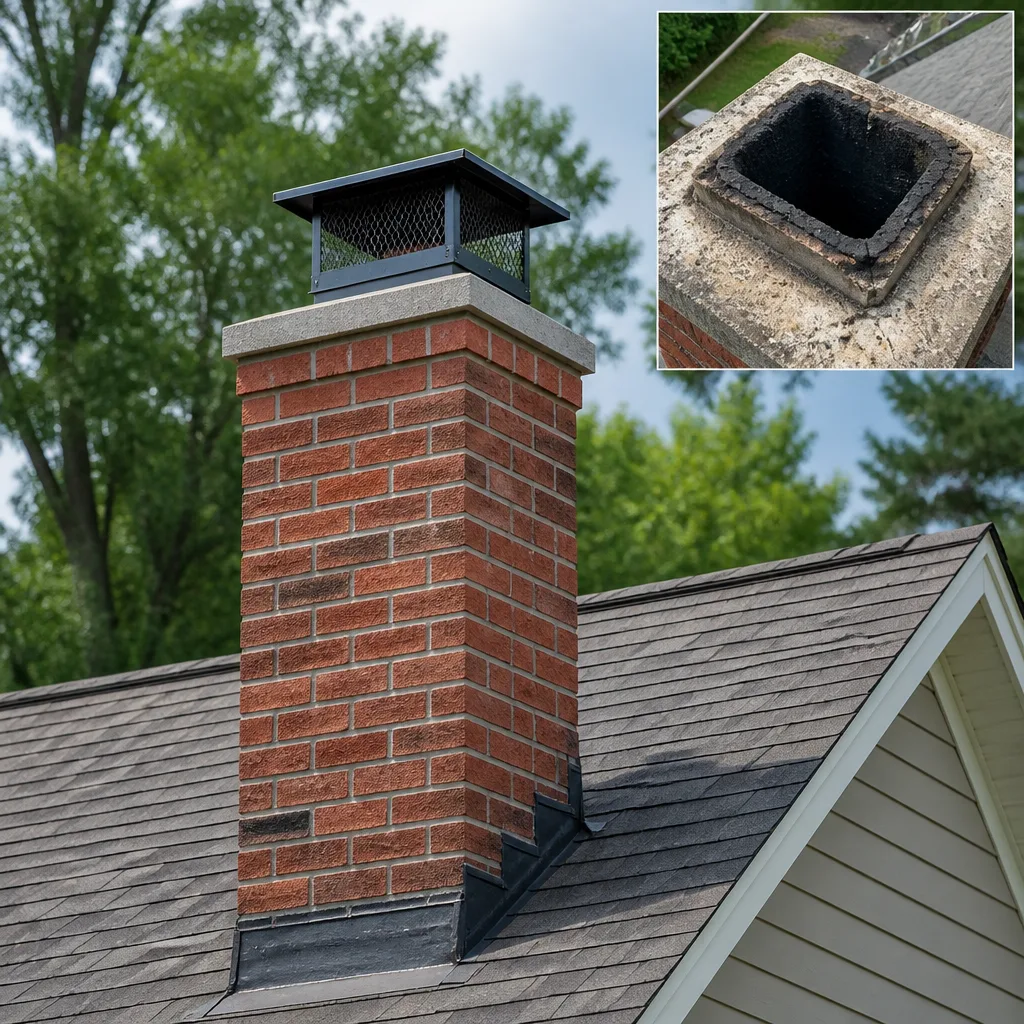 Sweep & inspection
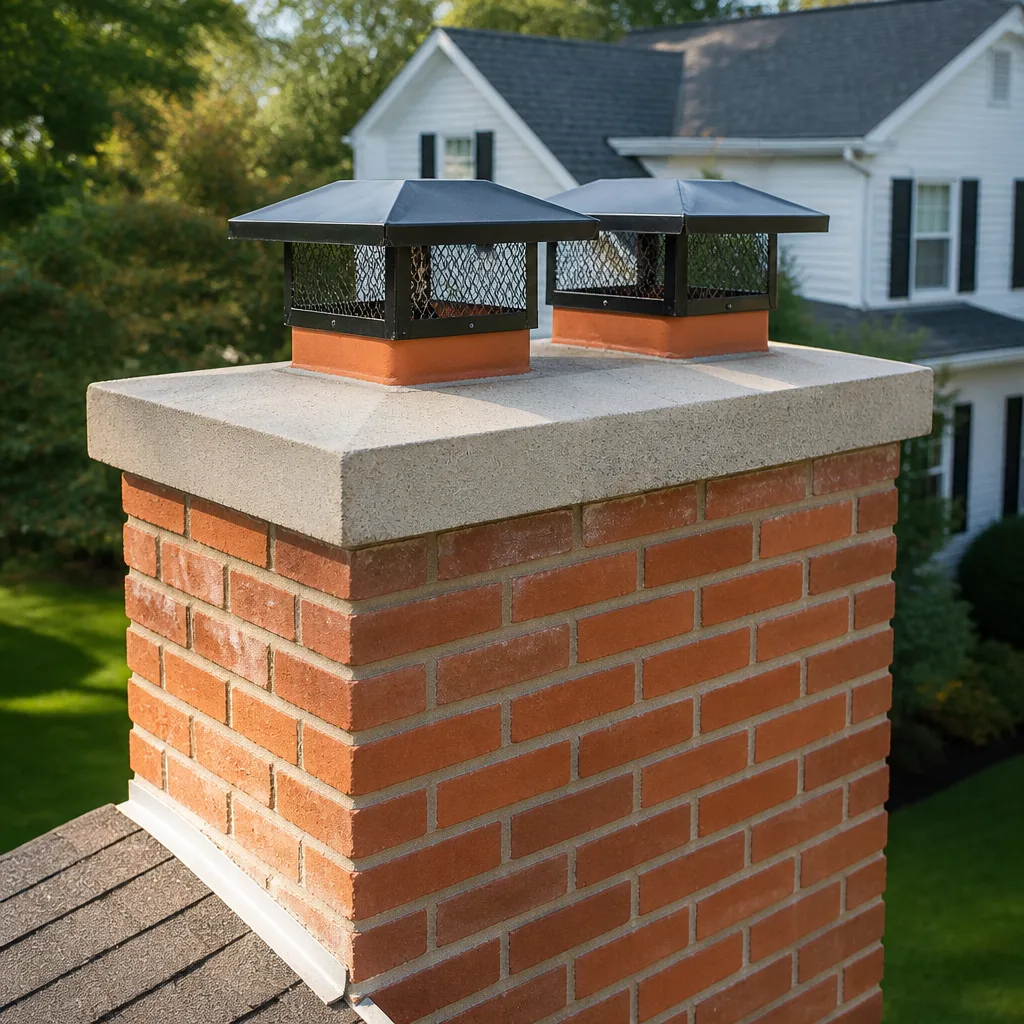 Caps & crowns
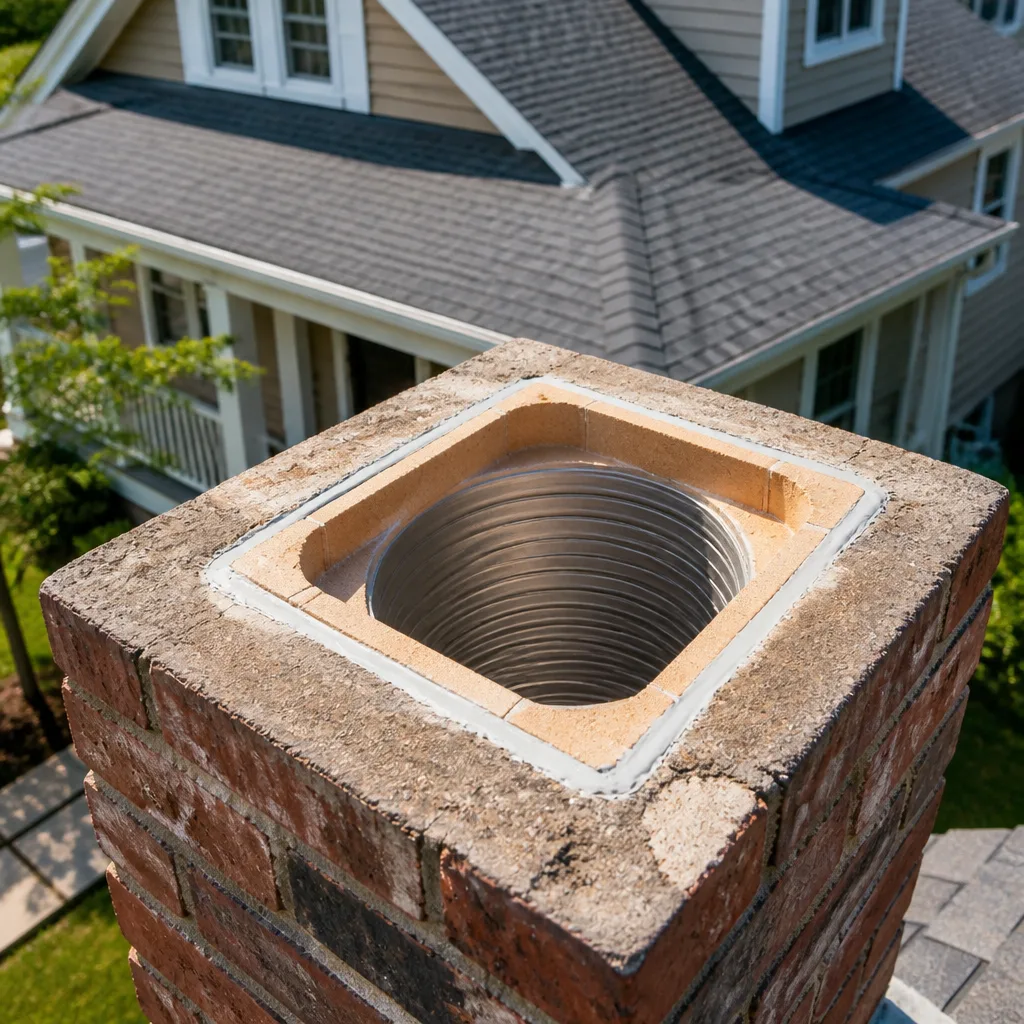 Flue relining
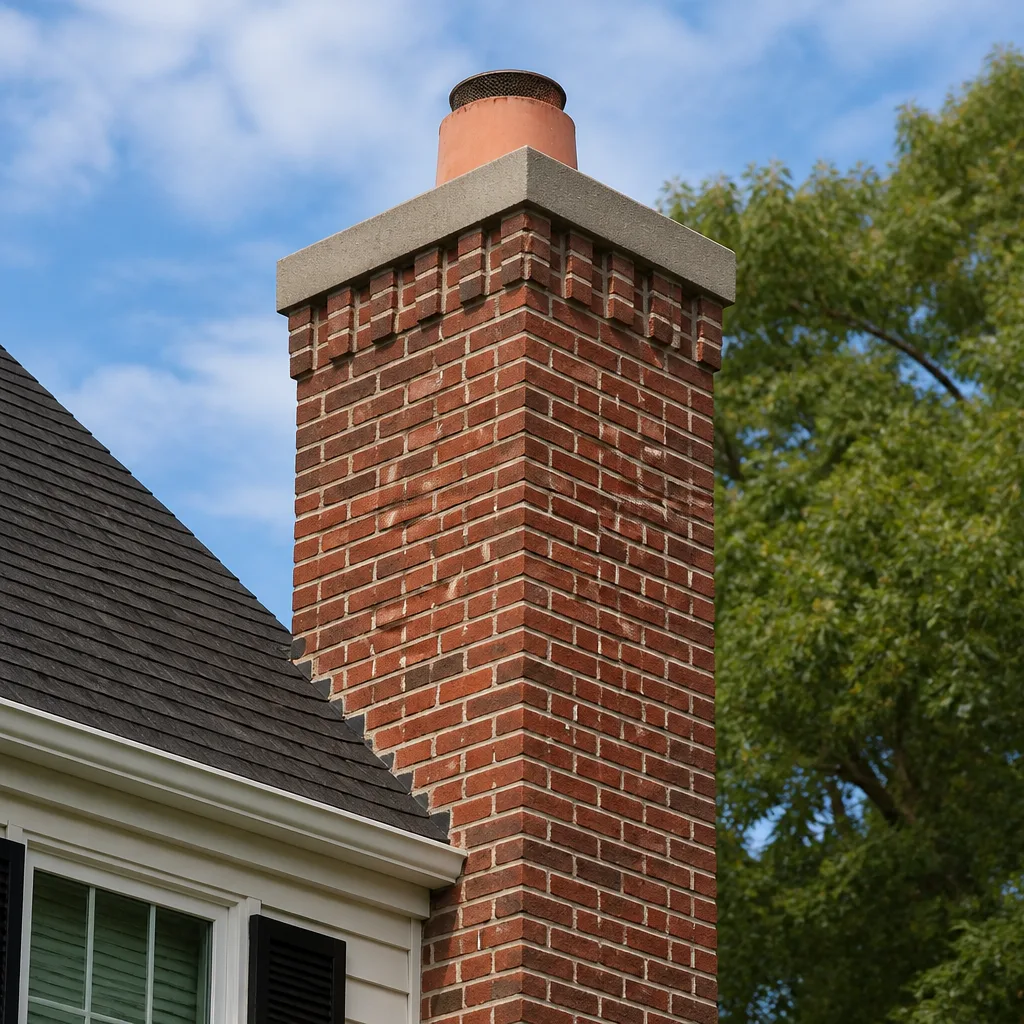 Masonry repair
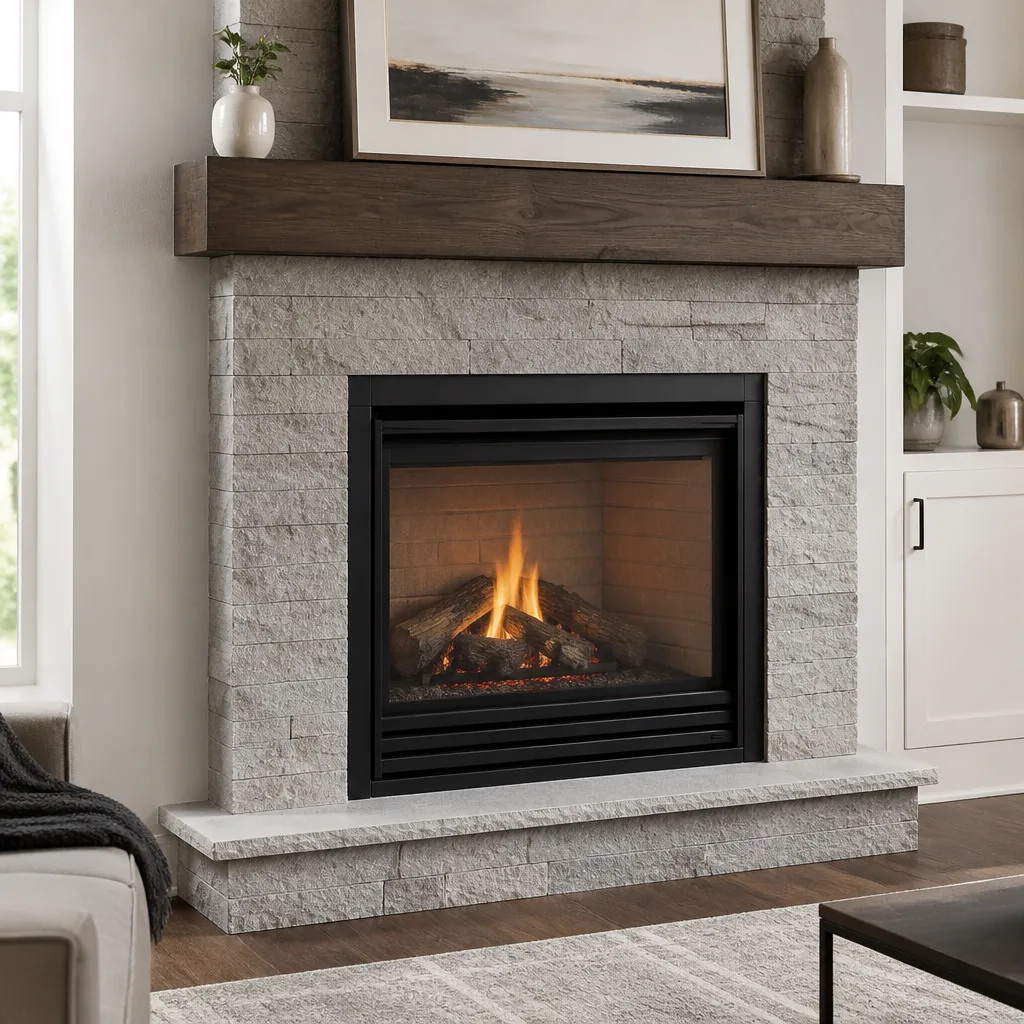 Gas fireplace service
Level 1 sweep and inspection to the NFPA 211 annual standard - flue, crown, cap, and flashing checked and photographed
Chimney sweep logs do not sweep chimneys. They loosen some creosote - which then falls where a brush and vacuum still have to collect it.
Chimney Sweep Maintenance Schedule: What to Do and When
Most chimney advice boils down to one line: sweep once a year. That line is fine as a default and wrong as a plan. The honest answer depends on what you burn, how often you burn it, and how old the flue is. If you burned fewer than 15 fires last season with well-seasoned wood, you probably don’t need a full sweep yet. If you burned green wood twice a week, you might need one before December. The calendar matters less than what went up the flue. This guide builds a real maintenance schedule for Fayetteville homeowners, layer by layer: fuel type, burn frequency, seasonal timing, what you can check yourself, and what needs a professional.
Quick Answer
Sweep a wood-burning chimney when the creosote layer reaches about 1/8 inch, or once a year if you burn regularly through the season. Schedule an inspection every year regardless of fuel type – gas inserts included – and time the inspection for spring in Fayetteville, after the humid season, so you catch moisture damage before it spreads. Heavy burners and anyone burning unseasoned wood should plan on a mid-season check.
Styles & brands we work with
- Sweep & inspection
- Caps & crowns
- Flue relining
- Masonry repair
- Gas fireplace service
Table of Contents
- Why “Once a Year” Isn’t a Real Schedule
- The Usage Matrix: How Fuel Type Changes Your Timeline
- Why Spring Is the Right Time for a Fayetteville Inspection
- The October Pre-Season Check
- What You Can Check Monthly During Burning Season
- Gas Fireplace Maintenance: The Schedule Most Homeowners Skip
- How a Liner Repair Resets Your Inspection Interval
- Documentation to Keep for Insurance and Home Sales
Why “Once a Year” Isn’t a Real Schedule
“Once a year” is a shorthand, and like most shorthand it loses the detail that matters. A chimney’s maintenance interval depends on how much creosote and soot accumulate, and that depends on what you burn, how hot the fire runs, and how dry the wood is. A homeowner who lights six or seven fires a season with kiln-dried hardwood and a homeowner who burns twice a week through January with green wood are not on the same schedule, and pretending they are is how problems get missed.
Creosote is the byproduct to watch. It forms in layers, starting as a light soot and thickening into a tar-like glaze that’s harder to remove and easier to ignite. The rough rule professionals work from: once the deposit reaches about 1/8 inch, it’s time to sweep. You can’t measure that reliably from the firebox, which is exactly why the annual inspection matters – and why the inspection should tell you something specific rather than just confirm the chimney “needs work.”
In Fayetteville, the burning season is shorter than in the mountains. That’s a small advantage for creosote buildup and a real disadvantage for moisture. A chimney that sits idle for eight months while humidity does its work can develop cracked mortar, a spalling crown, or a rusted damper without a single fire to point to the problem. The yearly check catches both sides: what the fires left behind and what the off-season did.
Our technicians have up to experience, and the one thing that experience teaches is that schedules should be honest about use. A maintenance plan that assumes everyone burns the same way isn’t a plan. It’s a calendar reminder.
The Usage Matrix: How Fuel Type Changes Your Timeline
Different fuels leave different deposits on different timelines. This is the part most generic maintenance advice skips, and it’s the part that should drive your schedule. Here’s how it breaks down for the three fuels we see most in Fayetteville.
Cord wood (seasoned hardwood)
Seasoned cord wood burned hot produces modest creosote. If you burn a few times a week through the season and season your wood properly for at least a year, an annual sweep keeps you ahead of it. The key phrase is “burned hot” – a smoldering fire, even with good wood, leaves far more deposit than a fire that gets real air.
Cord wood (green or unseasoned)
Green wood is the schedule-breaker. It burns cooler, produces more smoke, and lays down creosote faster than dry wood on every metric. Homeowners burning green wood twice a week may need a sweep before December and a mid-season look after the holidays. This is also the fuel that makes glazed creosote more likely, and glazed deposits generally call for chemical treatment followed by a re-sweep, not a single pass.
Manufactured logs
Manufactured logs burn consistently and produce a predictable deposit, but they’re not a free pass. Some varieties leave more residue than dry cord wood, and the wax binders can leave a sticky film that traps soot. An annual sweep remains the baseline; if you burn manufactured logs exclusively, tell the technician, because it changes how the flue is cleaned.
Gas inserts and gas fireplaces
Gas produces no creosote, so the firebox stays clean – but gas appliances still need annual servicing, and most homeowners assume otherwise. The byproducts here are moisture and slightly acidic exhaust, plus dust and debris that find their way into the flue, and the components that matter (the burner, the pilot assembly, the venting) can fail quietly. We’ll come back to gas in its own section, because it deserves one.
Why Spring Is the Right Time for a Fayetteville Inspection
Spring is inspection season in Fayetteville, and the reason is straightforward: humidity. Our late-spring and summer air is heavy with moisture, and a chimney is a masonry structure that reacts to it. Any small defect – a hairline crack in the crown, a hairline gap in the flashing, a mortar joint that’s starting to go – gets worse over a humid summer. Catch it in April or May, and it’s a repair. Catch it in October, and it’s sometimes a bigger one.
The seasonal timing also keeps the damage pathway short. If the inspection finds a moisture issue in May, the repair happens before the rainy stretches of late summer. If it waits until fall, the chimney has spent the season absorbing water and the fix may have grown in scope.
Here’s what a spring inspection actually covers:
- Exterior check – crown, flashing, mortar joints, cap, and the chimney’s overall condition from the roof.
- Firebox and damper – visible cracking, damper operation, smoke shelf condition.
- Flue interior – a camera inspection of the liner, looking for gaps, cracks, offsets, and the thickness of any deposit.
- Venting and connections – the appliance connection, any joints, and the path of the flue.
- Written report – photos, findings, and a clear statement of what needs attention now, what can wait, and what’s fine.
That last item matters more than the rest. A chimney inspection should give you a document, not just an opinion. If you want to know how that visit works in practice, our chimney sweep page walks through the process, and the inspection itself stands alone – it’s not a gateway to a sales pitch. If you only need the inspection for an insurance carrier or a real-estate transaction, that’s a perfectly good reason to book one.
The October Pre-Season Check
Spring is for finding problems. October is for confirming the chimney is ready to burn. These are two different jobs, and doing both is how a schedule actually works.
The October check is lighter than a spring inspection. It’s a functional pass: is the damper opening and closing cleanly, is the cap intact and clear of bird nests or leaf debris, is the firebox free of anything that’s moved or settled over the summer, and has anything changed since the spring report. In Fayetteville, the first cool snaps tend to arrive with a flurry of first fires, and a chimney that sat all summer is the one most likely to surprise you. A blocked cap or a damper that seized over the humid months is a common reason a first fire smokes back into the room.
The pre-season check is also when we confirm the sweep is current. If the spring inspection noted a creosote layer under 1/8 inch and you haven’t burned since, you’re clear for the season. If it noted a heavier layer, the sweep gets scheduled before the first fire, not after. Sweep first, assess honestly, repair only what the flue actually needs – that order keeps the season simple.
One more thing the October visit is good for: correcting assumptions. Homeowners sometimes think a chimney that drafts well doesn’t need attention. Draft is a sign of airflow, not of liner condition. The two are unrelated, and only an inspection tells you what the flue actually looks like.
What You Can Check Monthly During Burning Season
During the burning season, a few checks keep you ahead of problems without touching anything that requires a tool or a ladder. Do these monthly, more often if you burn frequently.
- Look up the firebox. With the fireplace cold, look at the firebox walls and the damper area for new cracking, crumbling mortar, or white staining. New staining often means moisture is getting in.
- Operate the damper. Open and close it a few times. It should move smoothly and sit flush when closed. A damper that sticks, grinds, or won’t stay open is telling you something.
- Check the smoke shelf area. Look up past the damper for soot buildup or debris. If you can’t see past the damper without a mirror and light, that’s normal – leave it for the professional.
- Watch the smoke. A fire that smokes back into the room on a normal day is a signal to stop burning and get the flue checked.
- Check the cap from the ground. A missing or damaged cap is an open door for water, birds, and debris. Binoculars are enough.
What you shouldn’t do is anything that requires going onto the roof, opening the flue, or reaching into the firebox with tools. The chimney has real hazards, and the liner and flue are not a homeowner inspection zone. If a check turns up something, stop burning and call. That’s the whole safety rule, and it’s worth following.
Gas Fireplace Maintenance: The Schedule Most Homeowners Skip
Gas fireplaces still need annual service. This is the most common misconception we run into: because gas doesn’t produce creosote, homeowners assume the fireplace is maintenance-free. It isn’t. A gas appliance has a burner, a pilot or ignition system, a venting path, and a heat exchanger or firebox that all wear and accumulate dust over time.
The annual service on a gas unit focuses on different things than a wood sweep:
- Cleaning the burner and checking the flame pattern for consistent, even burn.
- Inspecting the pilot assembly and ignition components for wear.
- Checking the venting and the termination for blockage or corrosion.
- Confirming the glass and firebox are clean and the seals are intact.
- Verifying the unit’s clearances and that no debris has gathered behind or beneath it.
Gas also produces moisture as a byproduct, and in a humid Fayetteville summer that moisture has to go somewhere. A venting issue that would be minor in a dry climate can corrode components here faster than expected. Annual service is how you catch it early.
And the safety side is worth stating plainly: a gas appliance that isn’t venting correctly is a carbon monoxide concern, and carbon monoxide is not something to troubleshoot by nose. If a gas fireplace smells unusual, produces a lazy or yellow flame, or sets off a CO alarm, stop using it and get it checked. That’s a professional call, not a homeowner one.
How a Liner Repair Resets Your Inspection Interval
When a liner is repaired or replaced, the maintenance calendar resets. A new liner is a fresh start, and the inspection interval after installation is about verifying the install and then returning to the normal annual rhythm. This is where the material choice matters, and where the right products do more for a homeowner than the cheapest option on the shelf.
For flues that qualify, HeatShield ceramic resurfacing restores the existing liner instead of tearing it out. It’s the documented alternative to full relining for certain damaged flues, and it extends the life of a chimney that would otherwise need a full reliner job. For older or offset chimneys where a rigid liner won’t fit, DuraFlex flexible liner systems are the professional standard for the retrofit – they follow the flue’s path rather than demanding the flue be rebuilt around them. We install both because they’re what the industry actually specifies for those situations, not because they’re what’s on sale.
After any liner work, the schedule looks like this:
- Post-install verification – the installation is documented with photos, and the report states what was done and what was used.
- First-season check – a look after the first full burning season to confirm the liner is performing as expected.
- Return to annual inspection – once verified, the standard yearly inspection applies, aligned with the fuel type and usage.
Get the documentation for any liner work in writing. It’s the record that shows a future buyer or an insurance carrier that the chimney was brought up to standard, and it’s the piece that makes a repair count. If you’re weighing a repair against a replacement, our chimney repair page explains how the decision gets made, and a standalone inspection is often the first step.
Documentation to Keep for Insurance and Home Sales
Paperwork is part of the maintenance schedule, and it’s the part most homeowners treat as an afterthought. Keep a simple chimney file: every inspection report, every sweep record, every repair invoice, and any liner documentation. It’s a thin folder that does a lot of work.
Why it matters:
- Insurance. Carriers increasingly ask for proof of maintenance or inspection, especially on older masonry chimneys. A dated report answers the question directly.
- Home sales. A pre-purchase or pre-sale inspection produces the documentation a real-estate transaction needs. Buyers want to see that the chimney has been maintained, not hear that it has.
- Your own memory. A schedule is only as good as its record. If you can’t remember when the last sweep was, the folder tells you.
- Warranty and materials. Liner and resurfacing work should come with documentation of the materials used and the installation. If a question comes up later, the record is what you rely on.
Inspection work should not be an upsell gateway. It’s a standalone, documented service designed to satisfy real requirements – insurance, real estate, and annual safety compliance – and the report is the point of the visit. Keep the reports. They’re worth more than the memory of having had the work done.
Common Mistakes to Avoid
- Treating “once a year” as a rule instead of a baseline. It’s the right default for a moderate burner on dry wood. It’s wrong for a heavy burner on green wood, who needs a mid-season check. The schedule follows the usage, not the calendar.
- Skipping the inspection because there’s no fire in the firebox. A gas insert still needs annual service, and a chimney that sat idle all summer is the one most likely to have moisture damage. No fire doesn’t mean no check.
- Burning unseasoned wood to save a few dollars. Green wood costs more than it saves – it leaves heavier creosote that’s harder to remove and can turn glazed over time. Season your wood properly and let the schedule stay simple.
- Doing the flue check yourself. The firebox, damper, and smoke shelf are fine to look at. The flue and liner are not a homeowner zone, and the ladder work isn’t either. Stop at what you can see without tools.
- Ignoring small moisture signs. White staining, a bit of crumbling mortar, a rusted damper – these are the small, fixable head starts of a bigger repair, and Fayetteville’s humid summers make them grow. Don’t wait for fall.
- Not keeping the paperwork. A sweep without a record is harder to prove when an insurer or a buyer asks. Keep the reports.
- Assuming a “critical problem” call is always real. A good inspection gives you photos and a written finding, and it’s honest about what can wait. If you can’t see the evidence, get a second look.
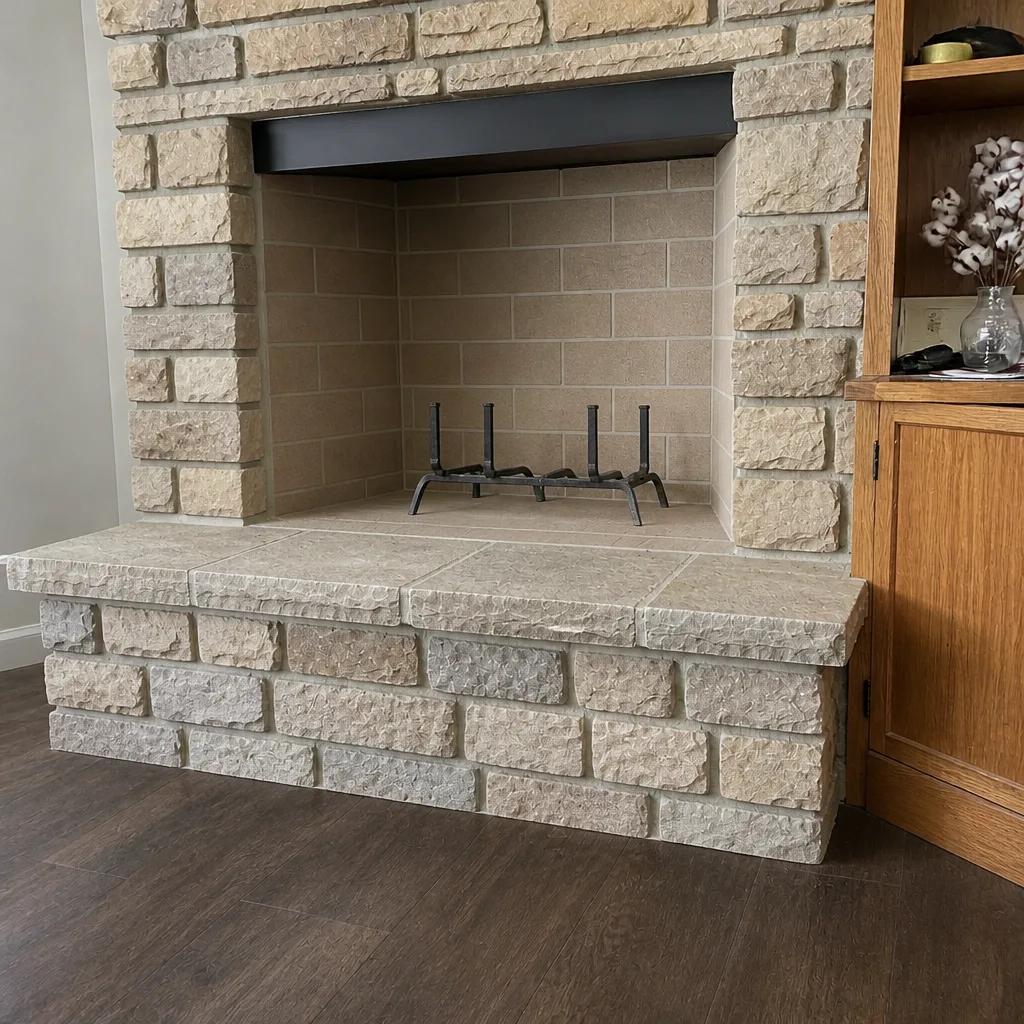
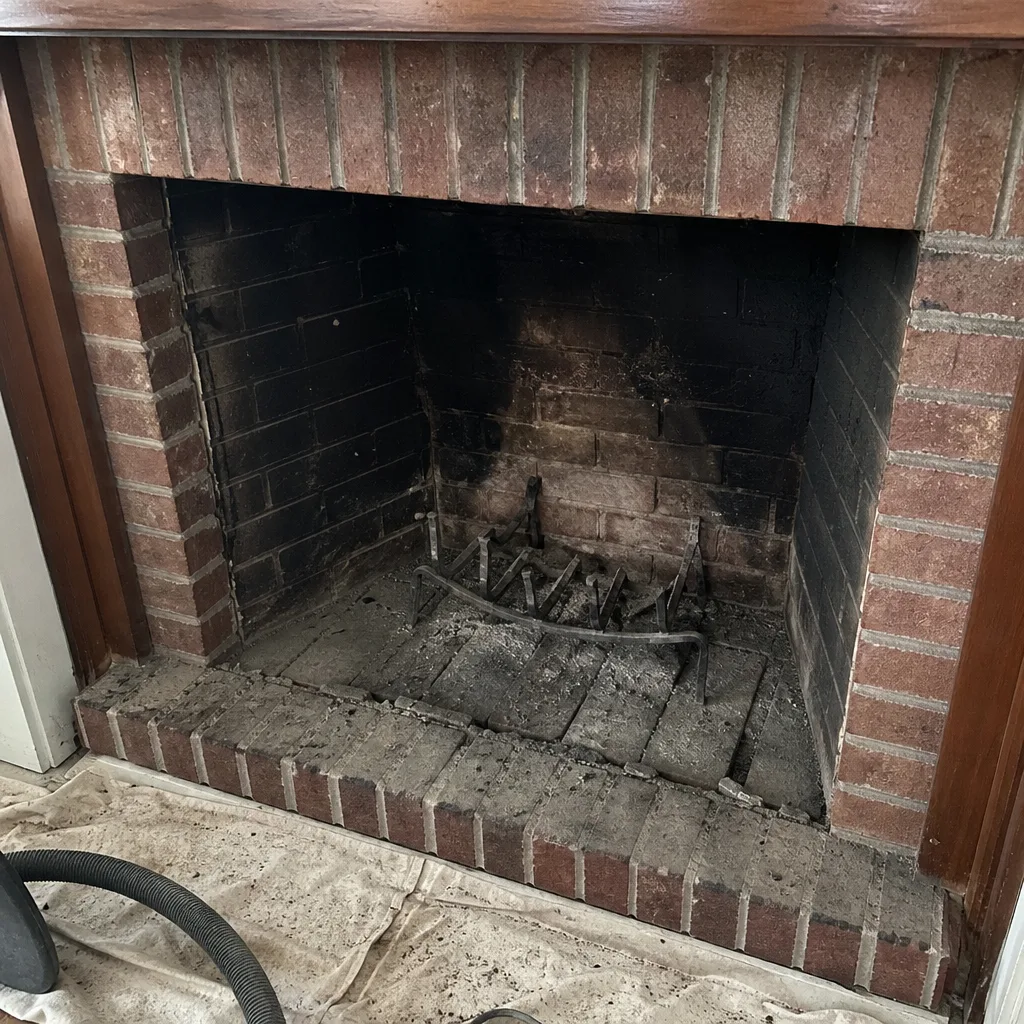
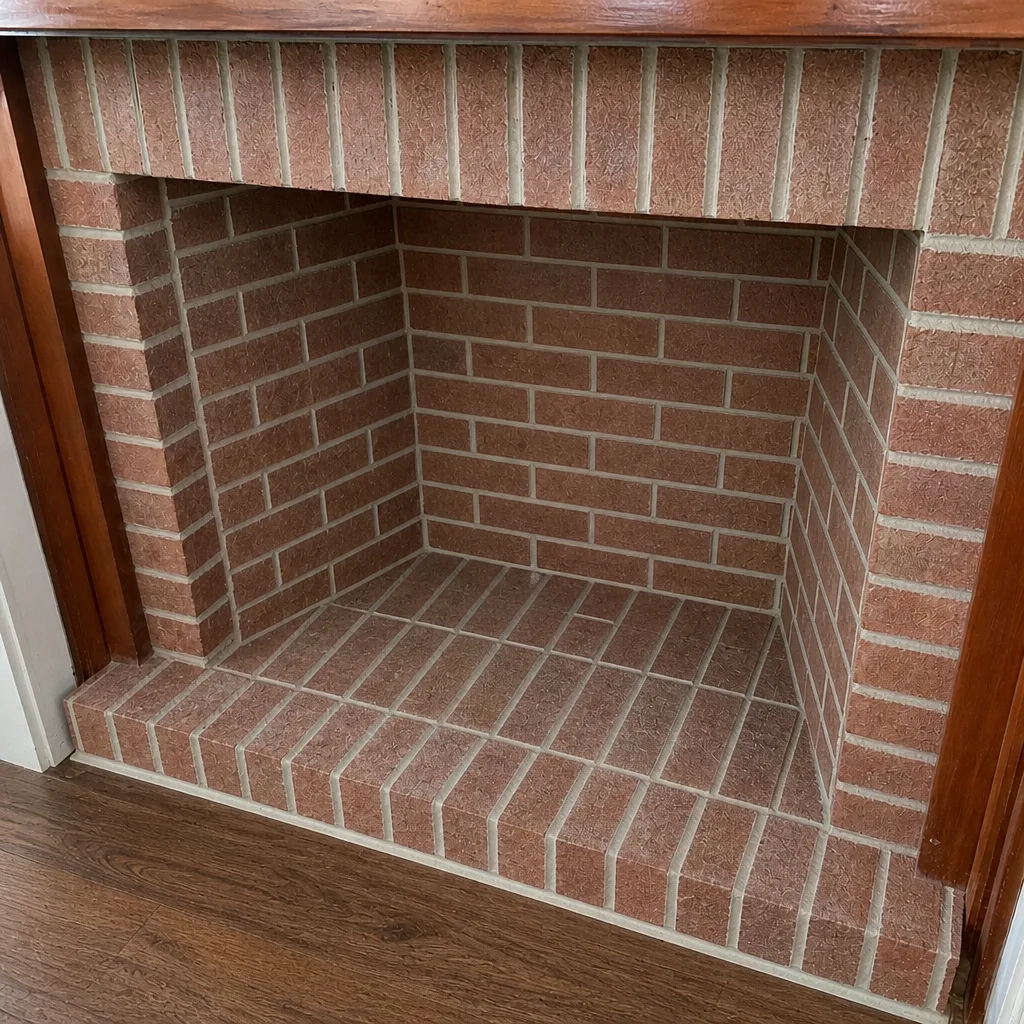
See the difference
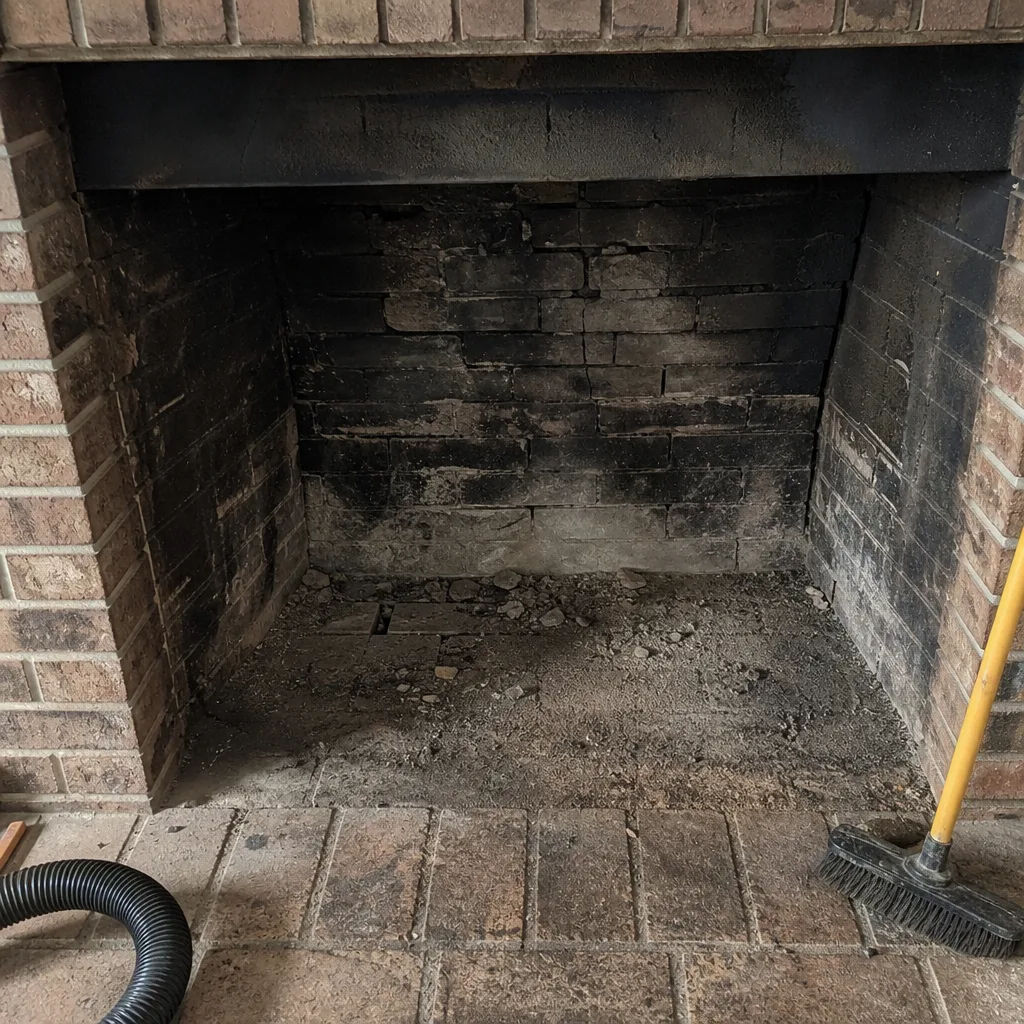 Before
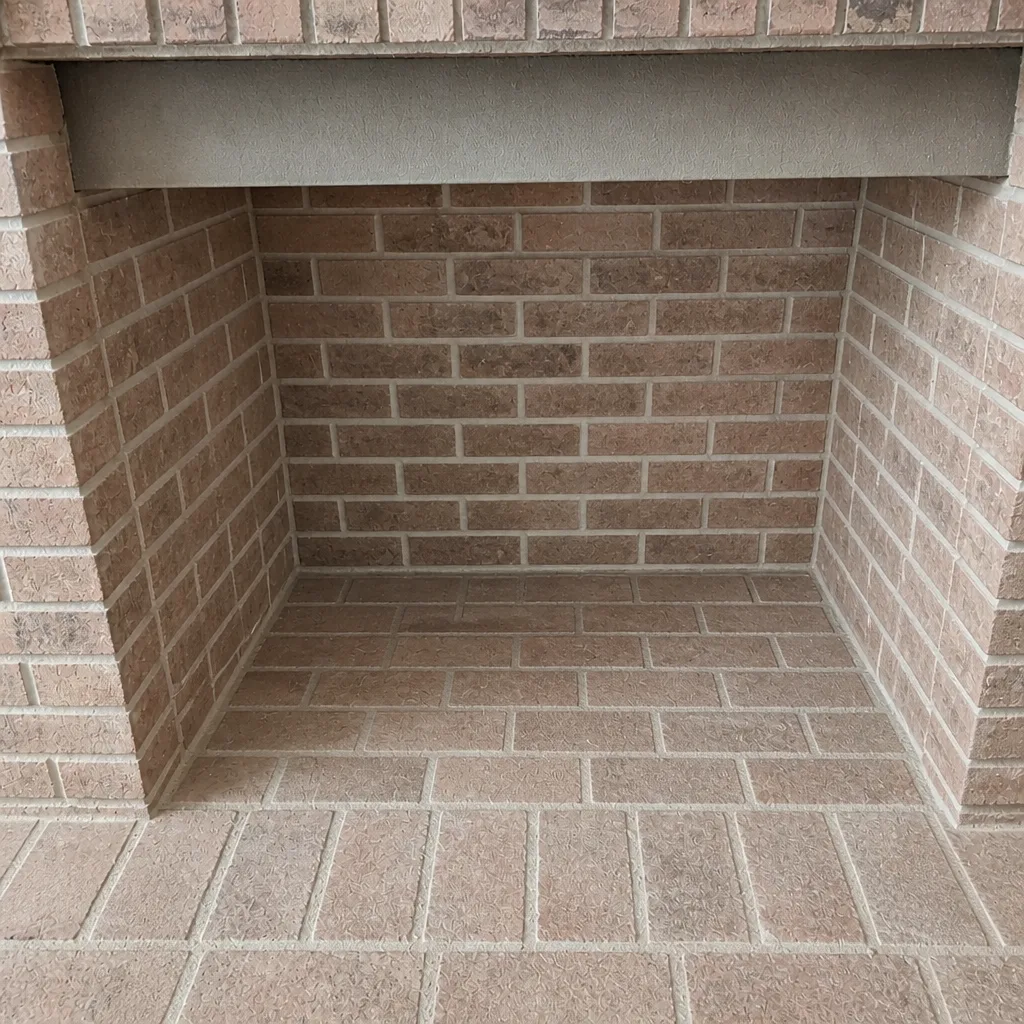 After
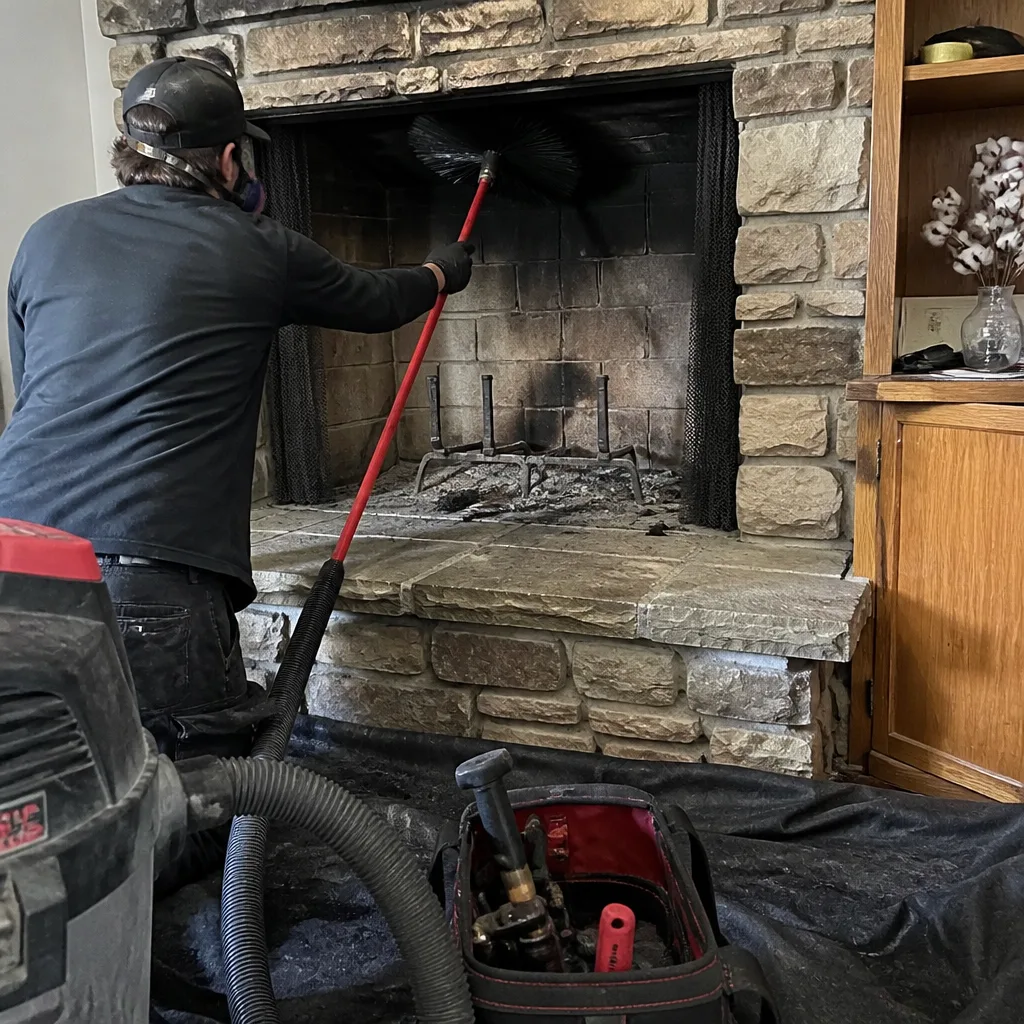 Before
 After
 Before
 After
When to Call a Professional
Some things are monthly checks. Others are a call. Call a professional if you see any of the following: a fire that smokes back into the room on a normal day; a damper that won’t operate smoothly or stay open; visible cracking or crumbling in the firebox or the damper area; white staining on the masonry; a cap that’s missing or damaged; a creosote layer near 1/8 inch; a CO alarm or unusual gas smell from a gas fireplace; or an inspection that’s more than a year old. If you’re buying or selling a home in Fayetteville, a pre-purchase or pre-sale inspection is its own reason to call. Delmar Chimney Sweep offers free estimates in Fayetteville – call (855) 608-7738. We answer 24/7. Fast dispatch from 7am to 7pm, Sunday through Friday. Our technicians have up to experience, and the report comes with camera evidence and photos you can see for yourself.
Frequently Asked Questions
Sweep when the creosote layer reaches about 1/8 inch, which for most regular wood burners works out to once a year, and inspect every year regardless of fuel type. Heavy burners on unseasoned wood should add a mid-season check. In Fayetteville’s humid climate, the spring inspection is the one that catches moisture damage. Call (855) 608-7738 for an exact quote – estimates are free.
Yes. Gas doesn’t produce creosote, but a gas fireplace still needs annual service on the burner, ignition, venting, and seals, and the moisture it produces matters in a humid climate. An annual check catches venting issues before they become a carbon monoxide concern. Call (855) 608-7738 to schedule a gas appliance inspection.
Creosote builds in layers, and a heavier layer ignites more easily and is harder to remove, sometimes needing chemical treatment and a re-sweep. Skipped inspections also let moisture damage grow unnoticed through the off-season. The fix is a sweep and an inspection, and neither is worth deferring another season. Call (855) 608-7738 for a written estimate on what your flue needs.
You don’t know without a camera inspection of the flue interior. That inspection shows cracks, gaps, and offsets and tells you whether resurfacing like HeatShield or a flexible DuraFlex retrofit fits the situation – or whether the liner is fine. Nothing gets recommended without camera evidence you can see. Call (855) 608-7738 for an inspection.
Yes, a few things. Look at the firebox for new cracking or white staining, operate the damper, watch for smoke backing into the room, and check the cap from the ground with binoculars. Stop at anything that requires a tool, a ladder, or reaching into the flue – that’s a professional call. Call (855) 608-7738 if anything looks off.
A standard sweep is usually a short visit, and a full inspection with camera work and a written report takes longer. The exact time depends on the flue’s condition and access, and your estimate will state the scope before the work starts. Call (855) 608-7738 to book a sweep with an inspection.
The Bottom Line
A real maintenance schedule has three layers: monthly self-checks during the burning season, a spring inspection to catch moisture damage before it spreads, and an October pre-season check to confirm the flue is ready for the first fire. How often you sweep depends on fuel and use – cord wood, manufactured logs, and gas each follow their own timeline, and green wood resets the schedule faster than any of them. Keep the paperwork, reset the interval after liner work, and treat the inspection as a document, not an opinion. If you’re in Fayetteville and want a straight answer about what your chimney actually needs, we’ll sweep first and repair only what the flue requires.
Call Delmar Chimney Sweep at (855) 608-7738 for a free estimate. We answer 24/7. Fast dispatch from 7am to 7pm, Sunday through Friday. If you’re in Fayetteville and want to start with the basics, our Delmar Chimney Sweep page is the place to begin – licensed and insured, with sweeping, repair, and inspection handled by the same trade from start to finish.
Written by the team at Delmar Chimney Sweep.